20 Interesting Language Facts That Sound Made Up (But Aren't)
There are around 7,000 languages alive on Earth right now, and the more you look at them, the stranger and more wonderful they get. Some countries pack hundreds of languages inside a single border. One island holds entire conversations by whistling. One alphabet holds a world record for length while another gets by on just twelve letters. And the language you are reading this in borrowed roughly a third of its words from a rival it once went to war with.
We have been sharing these language facts on our Wednesday carousels for a while, and enough of you asked for them in one place that we pulled together twenty of the best. These are the kind of interesting language facts that make you stop scrolling and text a friend. Grab a coffee and enjoy.
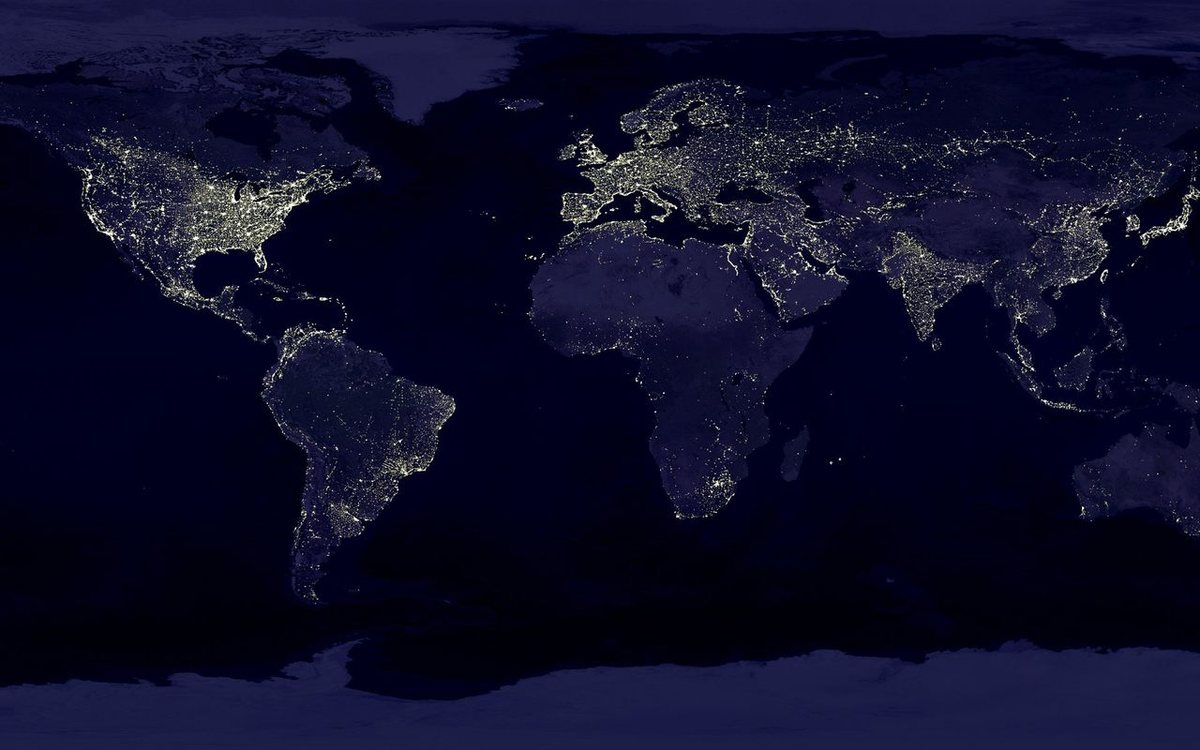 Earth at night. Every point of light marks people, and wherever there are people, there is language.
1. One country speaks more languages than all of Europe
Papua New Guinea is home to roughly 840 languages, more than the entire European continent combined. That works out to about one language for every 1,200 people, and these are not dialects of one another. Many are as different as English is from Japanese.
The reason is geography. Steep mountains, deep river valleys and dense jungle kept communities apart for thousands of years, with neighbouring villages sometimes separated by days of hard travel. Instead of a few languages spreading wide, hundreds of them evolved side by side in isolation. It is the single most linguistically diverse country on the planet, and a living reminder that landscape shapes language just as much as history does.
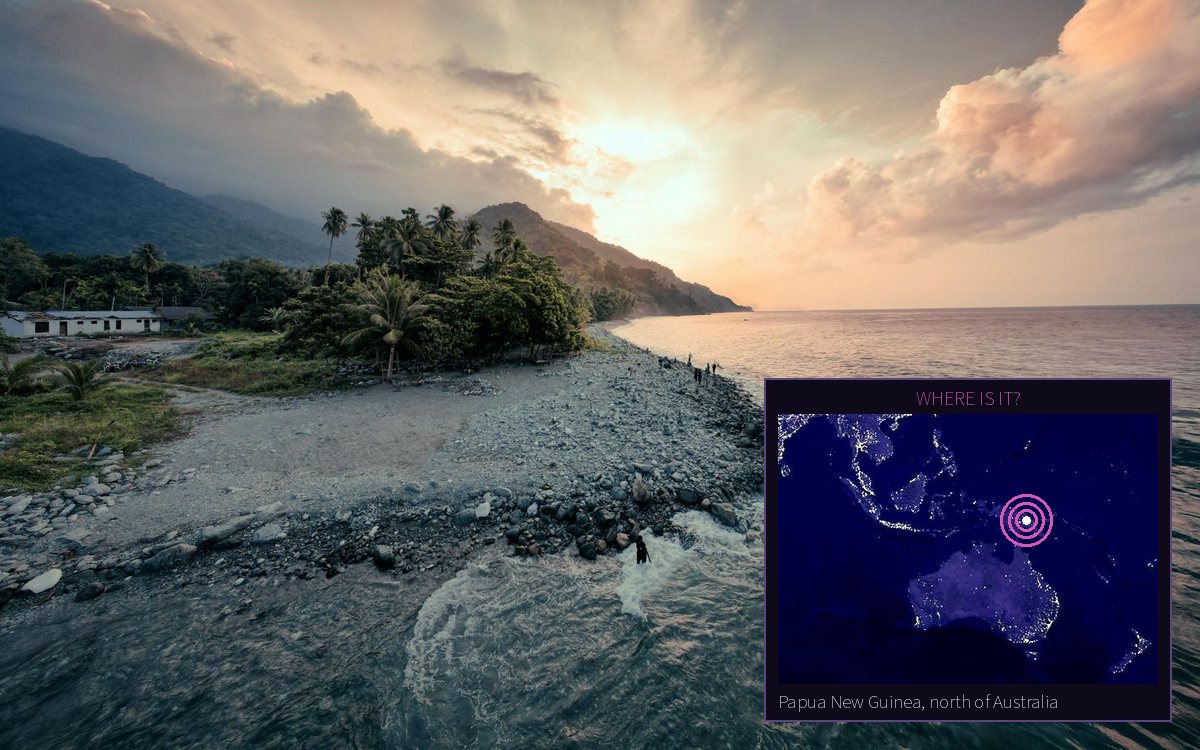 Papua New Guinea sits in the Pacific just north of Australia, and packs around 840 languages into its islands and highlands.
2. Just 23 languages are the mother tongue of half the world
Out of those 7,000 languages, a tiny group does most of the talking. Only 23 languages are the first language of roughly half of everyone alive, led by Mandarin, Spanish, English, Hindi, Arabic, Portuguese and a handful of others.
The flip side is sobering. The other half of humanity is spread across thousands of smaller languages, and many of them have only a few thousand speakers left. Linguists estimate that a language dies roughly every couple of weeks as its last fluent speakers pass away. So while a few giants dominate the headlines, most of the world's linguistic variety lives in languages you have probably never heard of.
3. Basque is related to no other language on Earth
Most European languages belong to sprawling family trees. English, Spanish, Russian, Greek and Hindi are all distant cousins in the Indo-European family. Basque, spoken in the mountains straddling northern Spain and southwestern France, belongs to nothing.
Linguists call it a language isolate: it has no proven relatives, living or dead. It was already being spoken in that corner of Europe before the Romans arrived with Latin, and it has quietly outlasted every language that has tried to replace it since. Nobody has ever convincingly linked it to another tongue, which makes Basque something close to a linguistic miracle, a language that has simply always been there.
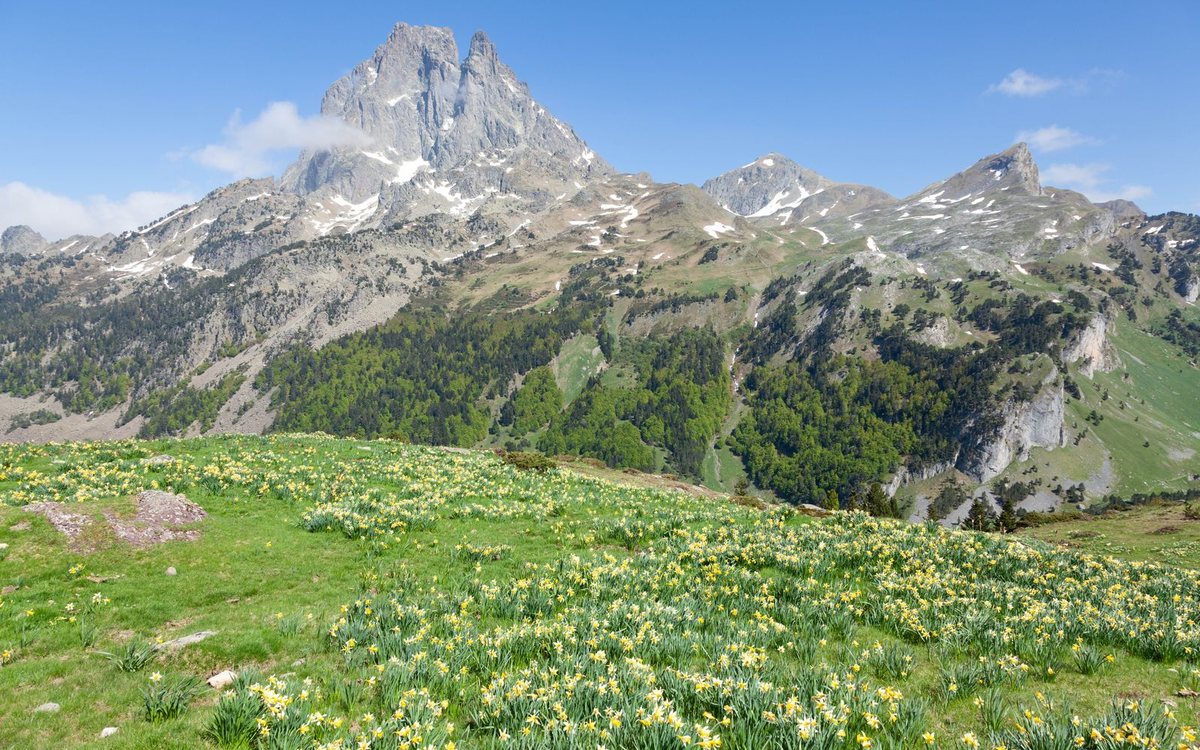 The Basque Country, tucked into the mountains between Spain and France, where a language with no known relatives has survived for millennia.
4. The Khmer alphabet holds a world record
Khmer, the language of Cambodia, has the longest alphabet in the world according to Guinness World Records: 74 characters, made up of 33 consonants, 23 dependent vowels and 12 independent vowels.
A couple of those consonants have quietly fallen out of everyday use, but they are still official members of the alphabet, padding the record out to its full length. If you have ever seen the flowing script carved into the walls of Angkor Wat, you have seen Khmer, a writing system that has been in continuous use for well over a thousand years. Learning to read it is a genuine feat, and native readers navigate all 74 characters without a second thought.
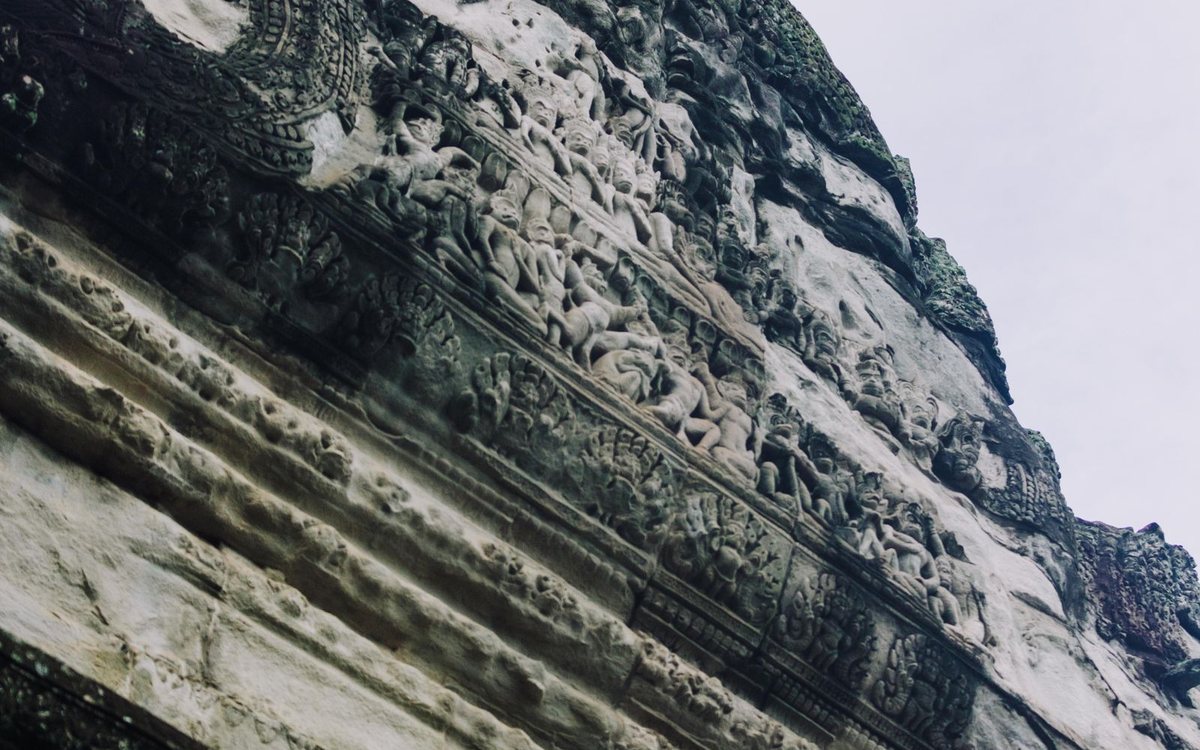 Khmer script, carved in stone in Cambodia, runs to a record 74 characters.
5. At the other extreme, one alphabet has just 12 letters
If Khmer is the marathon, Rotokas is the sprint. Spoken by a few thousand people on the island of Bougainville in Papua New Guinea, Rotokas gets by on one of the smallest alphabets in the world, usually counted as just 12 letters.
That is fewer letters than most children's alphabet songs. It turns out you do not need a huge inventory of symbols to write down everything a language needs, as long as the language has a relatively small set of sounds to represent. Rotokas and Khmer sit at opposite ends of the same spectrum, and both work perfectly well for the people who use them, which is really the only test that matters.
6. Japanese uses three writing systems at once
Most languages settle on a single script and stick with it. Japanese never had to choose. It weaves three systems through the same sentence, often in the same line.
Kanji, the characters borrowed from Chinese, carry meaning. Hiragana handles grammar, the little connecting pieces that hold a sentence together. And katakana marks foreign or borrowed words, from "coffee" to the names of overseas cities. A fluent reader switches between all three constantly and effortlessly, the way you might switch between print and cursive without thinking. It looks impossibly complex from the outside, but each system has a clear job, and together they make written Japanese remarkably precise.
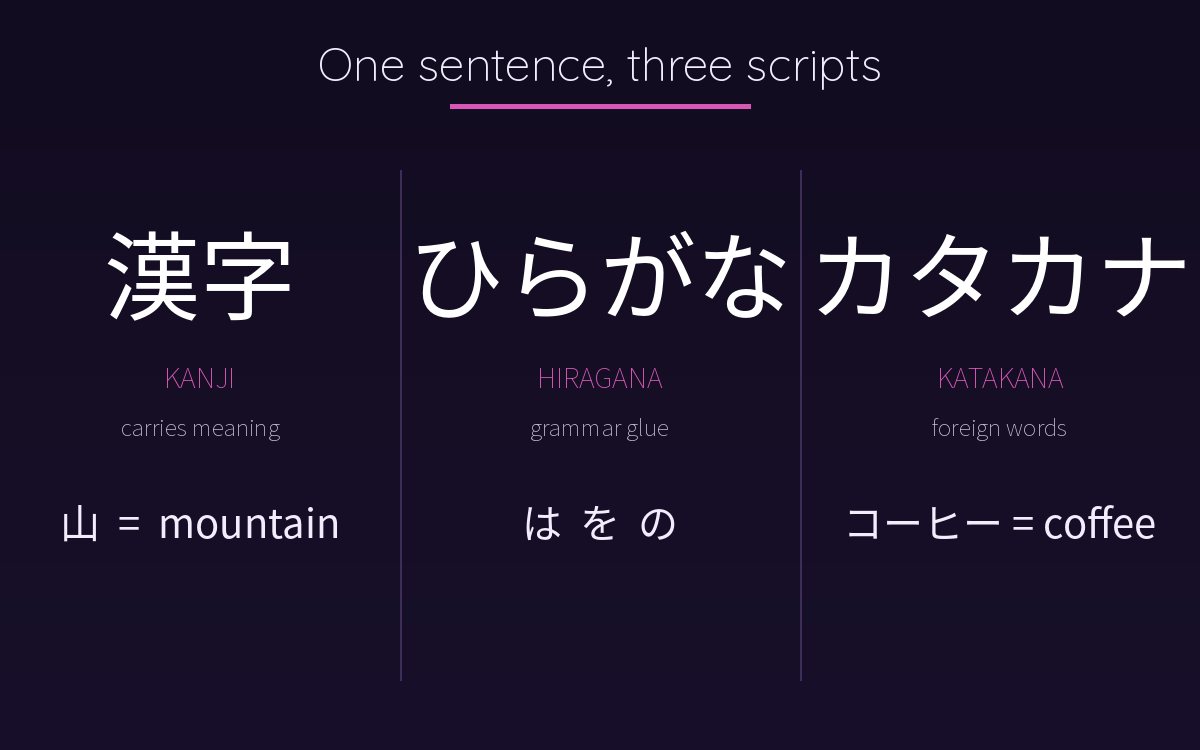 Kanji carries meaning, hiragana handles grammar, and katakana marks foreign words, often in the same sentence.
7. The Greeks were the first to write down vowels
Earlier alphabets, like the Phoenician one that inspired so many others, only wrote consonants. Readers were left to fill in the vowel sounds themselves from context, a bit like reading "wrds wtht vwls" and guessing the rest.
When the ancient Greeks adapted the Phoenician alphabet, they did something genuinely new: they gave vowels their own dedicated letters. It sounds like a small tweak, but writing vowels made text far easier to read aloud accurately, especially for someone encountering it for the first time. Nearly every European alphabet since, including the one these words are written in, inherited that idea. Alpha, beta and the rest quietly changed how the Western world reads.
8. The first printed book was in Latin, not German
Here is a myth worth busting. Johannes Gutenberg was German, and he printed his famous Bible in the German city of Mainz around 1455. So people naturally assume the first major printed book was in German.
It was actually in Latin. At the time, Latin was the shared language of the church, scholarship and serious writing across Europe, so a Latin Bible was the obvious choice for the new technology. Printing in local languages like German, English and French exploded soon afterwards, and arguably that is what truly changed the world, putting books in the everyday language of ordinary readers. But the very first one off the press spoke Latin.
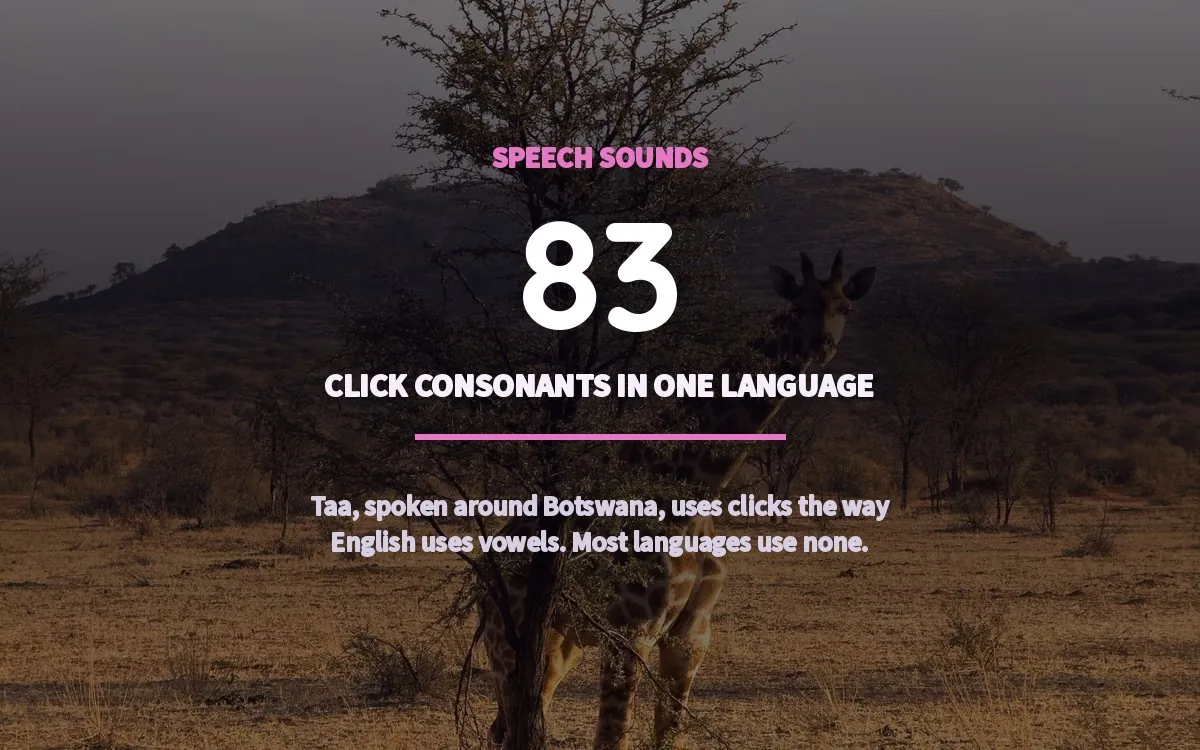
9. Some languages use clicks the way English uses vowels
In a handful of southern African languages, click sounds are ordinary consonants, not sound effects or expressions of disapproval. They sit inside words the same way a "t" or a "k" does in English.
Taa, spoken by a few thousand people in and around Botswana, is famous for having one of the largest sound inventories on the planet. Depending on how you count, it has dozens of distinct clicks, produced by different combinations of tongue placement, airflow and voicing. Most of the world's languages use no clicks at all, which makes Taa sound almost alien to outsiders. To its speakers, of course, it is simply their language, clicks and all.
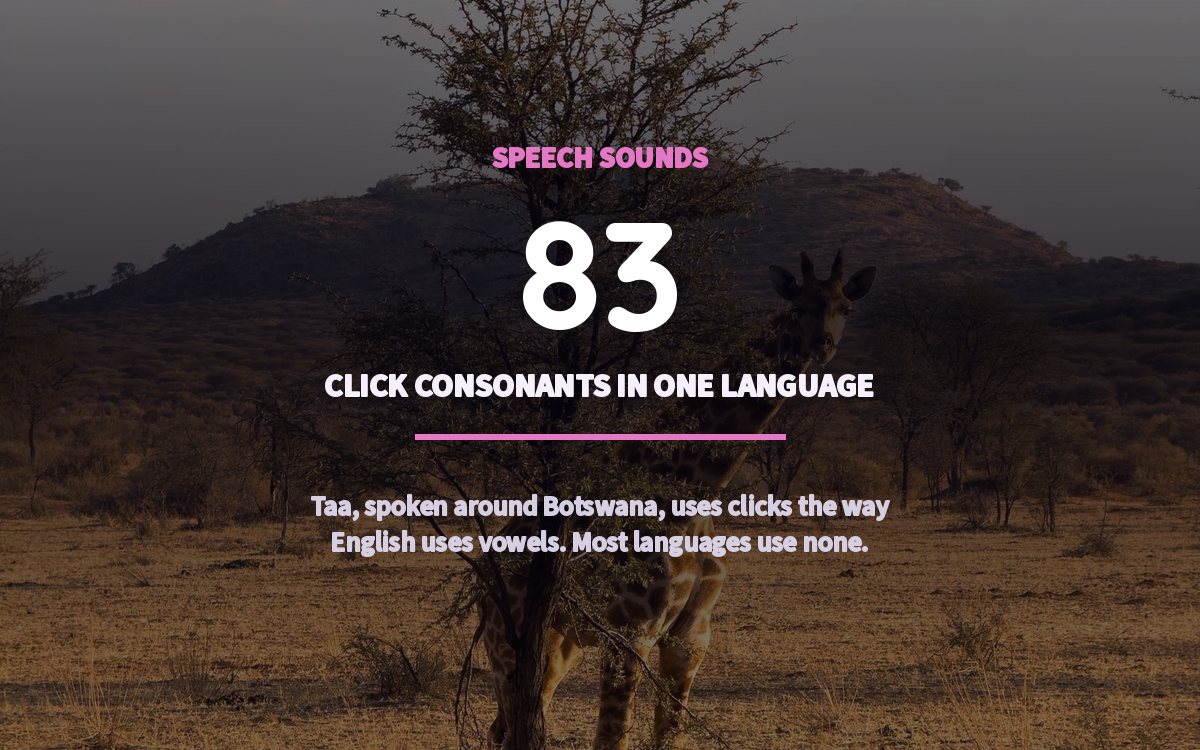 In Taa, clicks are everyday consonants, not sound effects.
10. On one Spanish island, people talk by whistling
On La Gomera, one of the Canary Islands, locals developed Silbo Gomero, a whistled form of Spanish. It is not a code or a set of signals. It is the actual language, with its vowels and consonants translated into whistles that carry across the island's deep ravines.
A good whistler can be understood up to about 5 kilometres away, far further than any shout would travel, which is exactly why it developed on such rugged terrain. The practice nearly died out in the twentieth century, but the island now teaches Silbo in its schools, and UNESCO has recognised it as part of the world's intangible cultural heritage. Somewhere on La Gomera right now, two people are having a full conversation without saying a single word out loud.
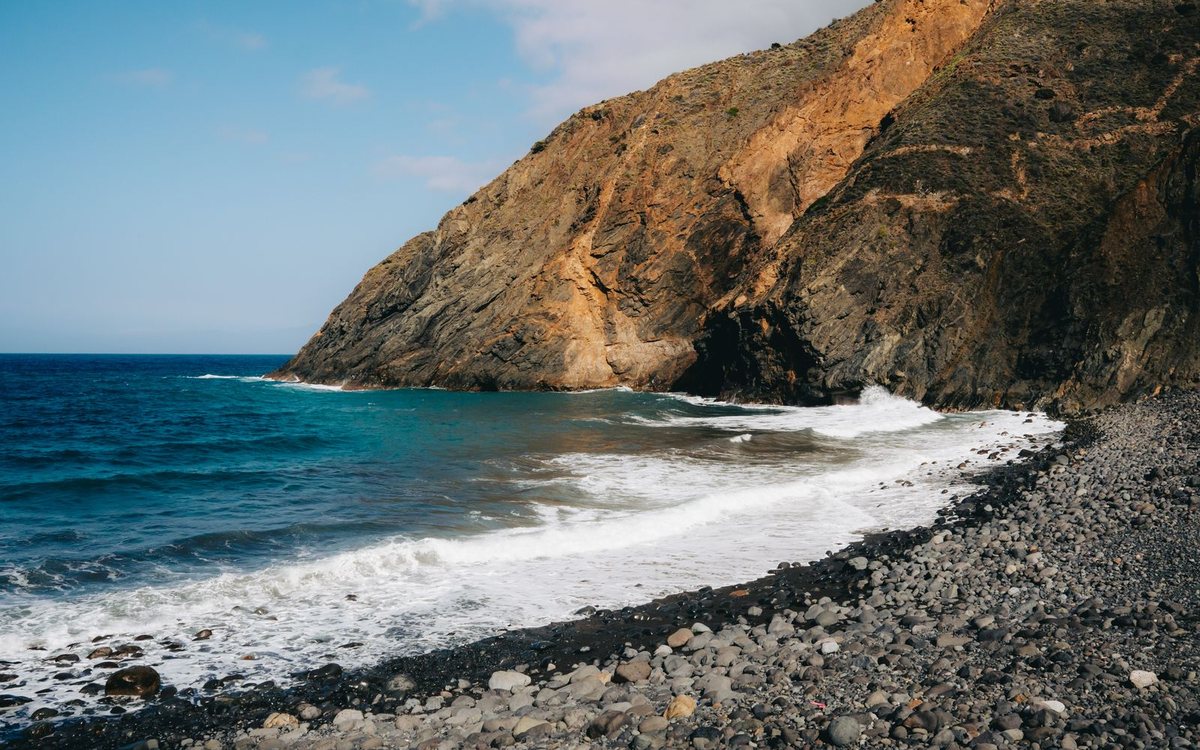 La Gomera in the Canary Islands, where Silbo carries whistled Spanish across the valleys.
11. Hawaiian has a name for almost every kind of rain
In Hawaiian, rain is not simply light or heavy. The language has an extraordinary number of words for it, each capturing something specific: the colour, the sound, the scent it carries, the direction it comes from, even the particular valley where that kind of rain tends to fall.
Some catalogues of Hawaiian rain names push the count past 200. There are names for a fine mist that drifts sideways, for a rain that arrives with a certain wind, for the shower that belongs to one specific place. It is a whole vocabulary built around something most languages sum up in a single word, and it tells you how closely the culture paid attention to the natural world around it. Language, at its best, is a record of what a people cared about.
 Hawaiian has hundreds of names for rain, one for almost every kind.
12. Speaking two languages can delay dementia by years
Bilingualism is a genuine workout for your brain. Research led by cognitive scientists has repeatedly found that people who regularly use two or more languages tend to show symptoms of dementia around 4.5 years later than people who speak only one.
The leading explanation is that constantly juggling two languages, choosing the right words and suppressing the other language, builds up what researchers call cognitive reserve. Your brain gets very good at managing competing demands, and that resilience seems to help it cope for longer when age-related decline sets in. It does not make anyone immune, but it is one of the most compelling reasons out there to keep learning a language, at any age. Your future self may thank you.
 Speaking two languages seems to build cognitive reserve that helps the brain cope for longer.
13. Up to half of young twins invent their own language
Watch toddler twins closely and you might catch them speaking something that only the two of them understand. It happens often enough to have a proper name: cryptophasia, from the Greek for "secret speech."
Studies suggest up to half of young twins develop some form of private language, stitched together from invented words, shared mispronunciations and mangled versions of what they hear from the adults around them. Because twins spend so much time together at exactly the age they are learning to talk, they end up co-authoring a mini-language on the fly. It is usually temporary. As their main language catches up and the wider world demands to be understood, the secret language quietly fades away.
 Up to half of young twins invent a private language only the two of them understand.
14. Reading Chinese lights up both sides of the brain
For readers of alphabetic languages like English, reading leans heavily on the left hemisphere of the brain, the side traditionally associated with language. Reading Chinese appears to work differently.
Because each Chinese character bundles together shape, sound and meaning in a single compact symbol, research using brain imaging suggests that reading it draws on both hemispheres, including regions usually linked to spatial and visual processing. In other words, the script you learn to read in may shape which parts of your brain you exercise. It is a striking reminder that a writing system is not just a neutral container for a language. It actively trains your mind in its own particular way.
15. The first word ever spoken in space was Russian
When cosmonaut Yuri Gagarin became the first human to leave the planet in April 1961, he did not mark the moment with a rehearsed, historic speech. As his rocket lifted off the pad, he simply said "Poyekhali!"
It is pilot and slang shorthand that roughly means "let's go" or "here we go," the kind of thing you might say pushing off on a bike. Every language imaginable has been spoken in orbit in the decades since, on space stations and shuttles and capsules. But Russian said it first, and it said it with an offhand, human confidence that still feels perfect for the occasion. Sometimes the biggest moments call for the smallest words.
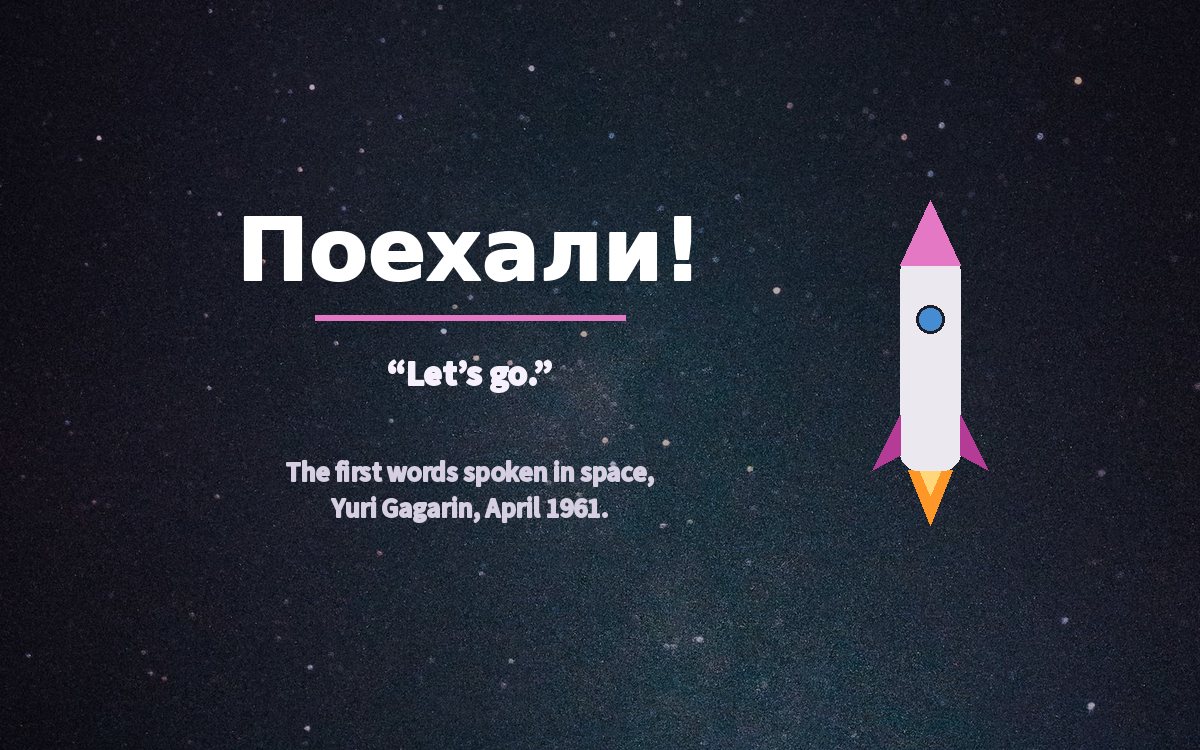 "Poyekhali!" - "Let's go." Yuri Gagarin's send-off as he became the first human in space, 1961.
16. Welsh has been spoken in Argentina for over 150 years
In 1865, a group of about 153 settlers sailed from Liverpool all the way to Patagonia, in the far south of Argentina. Their goal was unusual: to build a colony where they could speak Welsh freely, away from the pressure to abandon their language back home in Britain.
Astonishingly, it worked. More than a century and a half later, towns in the Chubut Valley still teach Welsh, hold Welsh-language eisteddfod festivals, and keep the tradition alive across generations. Interest has actually grown in recent years, with teachers travelling from Wales to run classes and enrollment climbing. It is one of the most unlikely language stories on the map: a corner of South America where a little bit of Wales has been quietly thriving since the days of steamships.
17. Around 30% of English comes from French
English likes to think of itself as a Germanic language, and at its core it is. But when the Normans conquered England in 1066, they brought French with them, and it stuck to English like glue for centuries afterward.
Today, roughly 30% of English vocabulary traces back to French, concentrated in words about law, government, food and refinement, the domains the French-speaking ruling class controlled. You can still hear the split at the dinner table. The animal in the field kept its plain Old English name, "cow," "pig," "sheep," while the meat served to the nobility took the French one, "beef," "pork," "mutton." Every time you order a steak, you are speaking a little medieval history.
18. About 4,000 Spanish words come from Arabic
For nearly 800 years, much of the Iberian Peninsula was under Arabic-speaking Muslim rule, and that long era left a deep imprint on Spanish. Around 4,000 Spanish words, roughly 8% of the everyday vocabulary, come from Arabic.
Many of them still carry the fingerprint of their origin: the Arabic definite article "al-," meaning "the," is fused right into the front of the word. Think of "almohada" (pillow), "almendra" (almond) and "alcalde" (mayor). Others hide it better, like "aceite" (oil) and "ojalá," an everyday word for "hopefully" that comes from an Arabic phrase meaning "God willing." Spanish speakers invoke that history dozens of times a day without ever noticing.
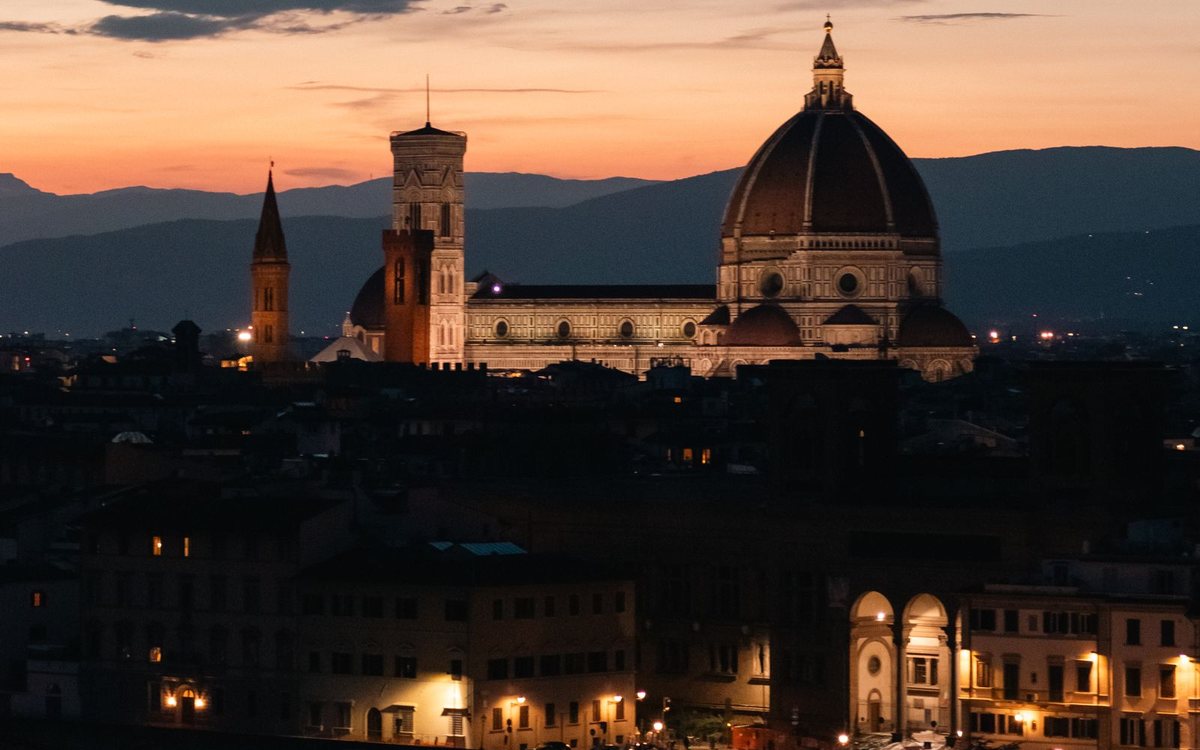 Florence, whose dialect became standard Italian thanks to Dante.
19. Standard Italian is basically one city's dialect
Italy did not become a single unified country until the 1860s, and for centuries what we loosely call "Italian" was a patchwork of regional languages so different that people from Venice and Naples could struggle to understand each other.
The version that eventually became standard Italian is essentially the Tuscan dialect of Florence. Its prestige was cemented back in the 1300s, when Dante Alighieri chose to write his masterpiece, the Divine Comedy, in his Florentine vernacular rather than in Latin. His work became so influential that his hometown dialect was later adopted as the national standard. So when modern Italians agreed on a common language, they were, in effect, all agreeing to speak like Dante.
20. The biggest French-speaking city is not Paris
French is not fading. It is spreading, just not where you might expect. The largest French-speaking city in the world today is not Paris. It is Kinshasa, the sprawling capital of the Democratic Republic of the Congo.
Central and West Africa are where the future of the French language is being written. With fast-growing populations and French as a language of education and administration, the region already accounts for a huge share of the world's French speakers, and that share keeps rising. By some projections, the vast majority of French speakers will live in Africa within a few decades. The map of any major language is always on the move, and French is drifting south.
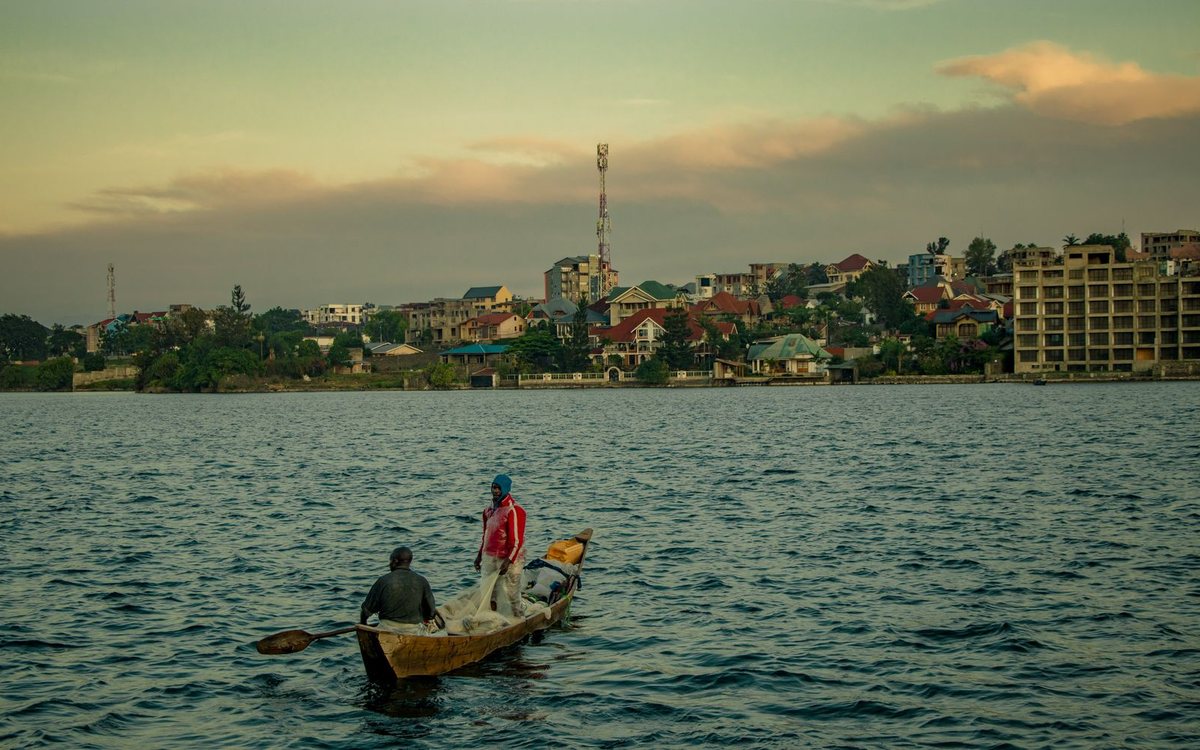 Kinshasa has overtaken Paris as the largest French-speaking city in the world.
The best language fact of all
Here is the one that matters most: you can learn any of these languages, and the barrier to starting has never been lower. Every fact on this list is a reminder that languages are living, surprising, deeply human things, and picking one up genuinely rewires how you see the world, and, as fact number twelve shows, possibly keeps your brain sharper for longer too.
Lingoodie turns learning into a daily habit by paying you to do it. You complete short lessons, earn real points as you go, and cash out to real money via Revolut or PayPal, available in 200+ countries. It is a small but genuine nudge to actually show up and practice, whether you are starting Spanish, French, Korean or any of the other languages we teach.
If you enjoyed these, you might also like our guides to the easiest languages to learn, the surprisingly rich world of Slovenian and its dual grammar, and how you can actually get paid to learn a language.
Which of these language facts surprised you most? Save this post for the next time someone tries to tell you languages are boring.