Can you actually get paid to learn a language? Here's the honest answer.

You've seen the ads. "Earn money while learning Spanish!" Some app promising you'll pick up a second language and somehow pocket cash in the process. It sounds like the kind of thing that's either a scam or a gimmick that pays out fifty cents after three months.
Here's what we found when we actually looked into it. Short version: most of it is exactly as sketchy as it sounds. But the model isn't impossible — one app gets it right.
Why this niche is mostly garbage
Search "get paid to learn a language" and you'll mostly find two things: survey apps that have nothing to do with language learning, and GPT-generated roundups listing apps that either don't exist anymore or don't actually pay for studying.
The honest reason so few apps pay for language learning is that the incentive structure doesn't work for most companies. Duolingo, Babbel, Rosetta Stone, their business model is subscriptions. They want you addicted enough to pay monthly, not rewarded for doing lessons. Paying users to learn would cost money without driving revenue. No subscription company is going to build that into their product.
Which is why Lingoodie's approach is worth paying attention to. It's structurally a different kind of business.
How Lingoodie works
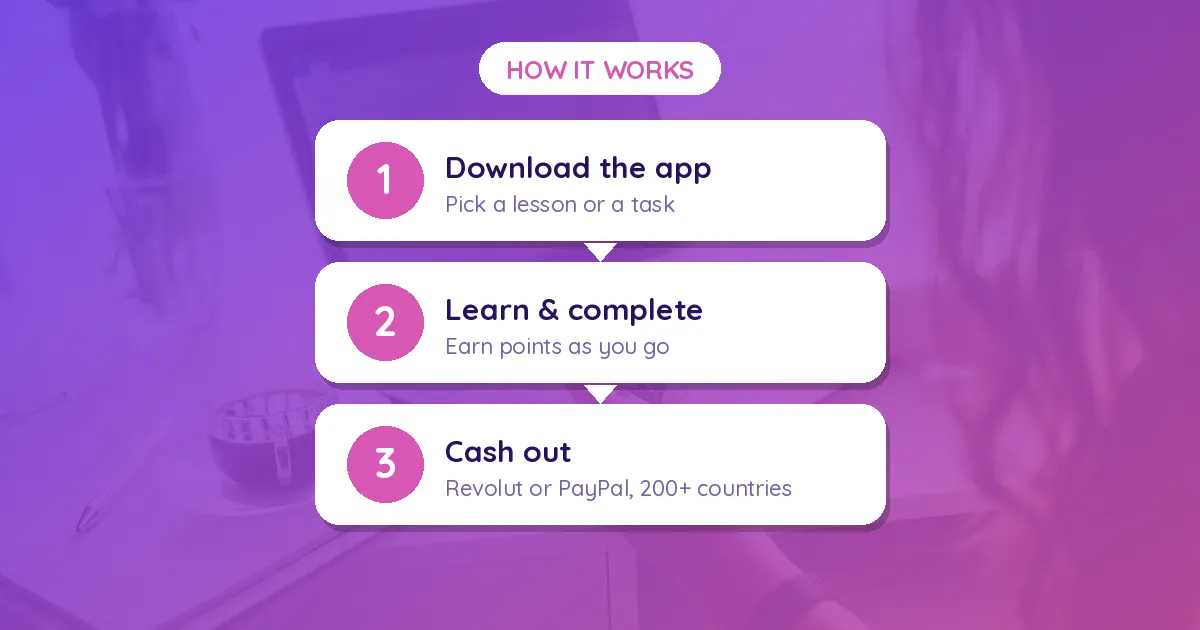
Lingoodie is a free Android app that covers Spanish, French, and Portuguese. You complete lessons, earn points, and withdraw real USD to Revolut once you hit a 2,500 point minimum, landing instantly with no fee taken out.
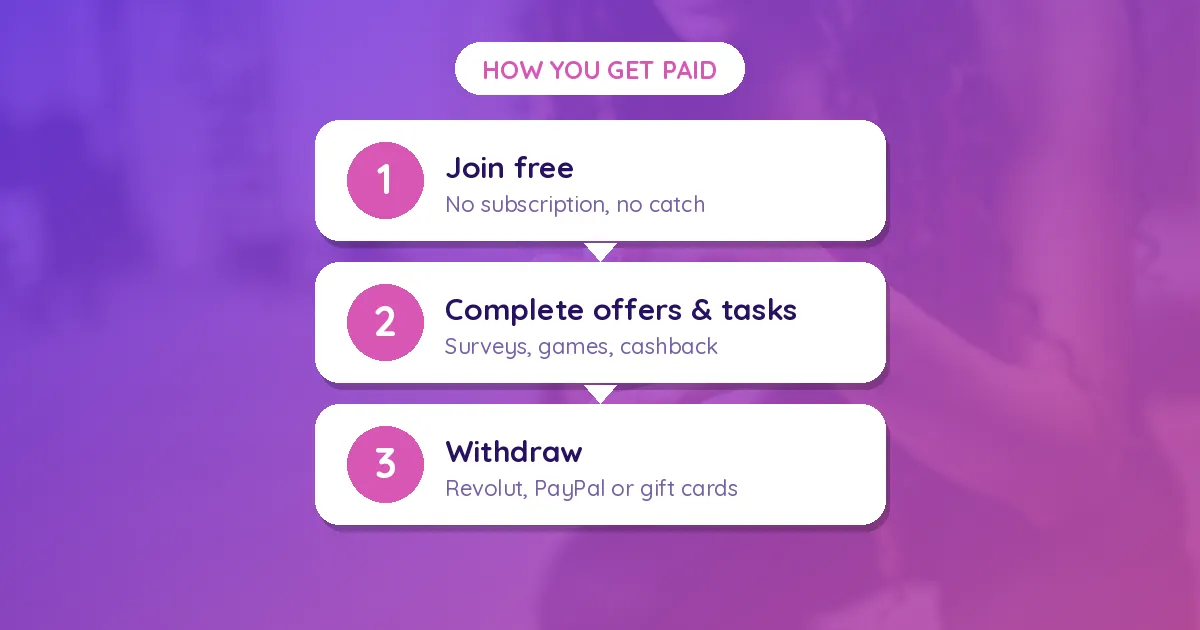
Revolut is a digital bank available in the EU, UK, and US, and you can now also cash out to PayPal, which has a higher 100,000 point minimum, takes 1 to 3 business days to process, so the money actually lands somewhere you can spend it. That's not a given with these apps. A lot of "earn money" apps pay in gift cards or platform credits that you can only redeem within their ecosystem.
The underlying logic: user engagement has value for the platform. Activity data, retention metrics, time-on-app, all of this matters for a growing product. Lingoodie shares a slice of that value back to users as cash. You're not getting paid for nothing. There's a reason it works economically.
Is it significant money? No. But "real money you can withdraw to a bank account" clears a bar that most apps in this category fail to clear.
What the competition actually offers
Duolingo has its streak system and league tables, but it doesn't pay you. The gamification is designed to keep you opening the app, not to compensate you for doing so. Babbel runs structured courses at $8-14 per month, with no earning component. Pimsleur is good for audio learners but costs more and pays nothing.
There are apps that sort of overlap, like those "watch videos, earn points, redeem for gift cards" products. Those are attention-harvesting apps with a thin learning skin. The language content is incidental.
A fairer comparison is Sweatcoin, which pays you for walking. Same basic idea: you were going to do this anyway, here's a small financial return for doing it through our platform. Lingoodie does that but with language lessons instead of steps. The lessons are actually decent, which Sweatcoin can't say about walking.
What to realistically expect
If you put in 20-30 minutes a day, you'll earn a modest but real amount over a few weeks. Don't go in expecting to replace income. The framing that works better is: you were going to spend time on your phone anyway, and now that time builds toward something, a language skill plus some cash in your account.
The people who get the most out of Lingoodie tend to already want to learn a language. The cash reward keeps them consistent when motivation dips, which it always does around week three or four of any learning habit. That's a genuinely useful function. External rewards work best when the intrinsic motivation is already there but unreliable.
The curriculum is worth mentioning separately
One thing that separates Lingoodie from pure "click to earn" apps: the lesson quality is good enough to actually teach you something. The vocabulary and grammar structure follows a logical progression. You're not just tapping through random flashcards. After a month of consistent use, most learners have a working base in their target language — not fluency, but enough to feel real progress.
That matters because the earning component stops being the point once the learning kicks in. At that stage the money is a side effect, not a motivation. That's a better user experience than apps where you're grinding through boring content purely for the payout.
The referral structure
Lingoodie pays a 5% lifetime referral bonus. If you refer a friend and they earn $100, you get $5. It's not remarkable, but it adds up if you get a few active users coming through your link. Worth dropping in a language learning WhatsApp group or on Reddit threads where people are asking about Duolingo alternatives.
Who should download it
If you've been meaning to learn Spanish, French, or Portuguese and keep losing momentum, this is worth trying. The cash nudge gives you a reason to open the app on the days when novelty has worn off. That's exactly the moment most language apps lose users.
If you're purely looking for a side hustle with a good hourly rate, look elsewhere. The earning per hour is low. But if language learning was already on your list and you just needed a reason to stay consistent, the money is real and the app is free.
Download Lingoodie free on Google Play or the App Store.
Try it for two weeks. If the language isn't clicking, uninstall it. Most people keep going.