Best App to Learn Korean in 2026: 9 Apps Tested by a Beginner (One Pays You)
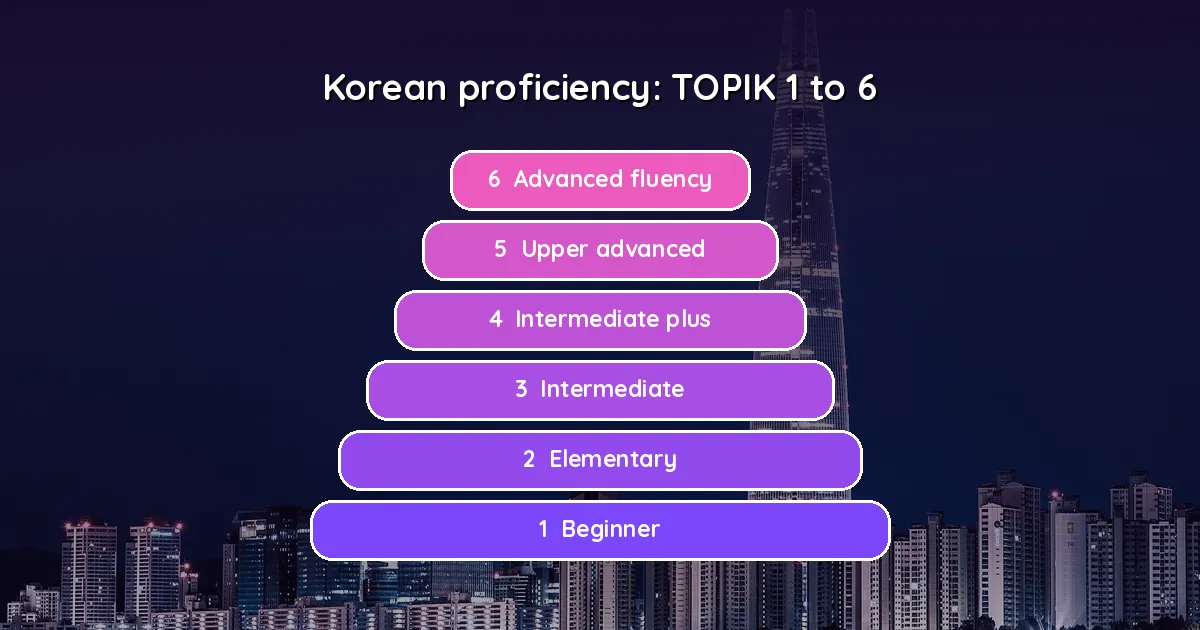
Korean is the language people are most surprised they can start. The reputation says it is impossibly hard, all unfamiliar characters and grammar that runs backwards. Then you spend one afternoon with Hangul, the Korean alphabet, and you realise you can already sound out a menu. The entry point is genuinely friendly. It is everything after the entry point that takes time.
That gap between an easy start and a long middle is the thing most Korean app reviews get wrong. They either scare you off with the Foreign Service Institute difficulty rating or they pretend the gamified streak on a cartoon owl will carry you to fluency. Neither is honest. Korean rewards a specific kind of learner: one who gets the alphabet down fast, builds a real grammar foundation early, and keeps showing up through the months where progress feels slow.
We tested nine of the most popular Korean learning apps in 2026 with English speakers in mind. We looked at how each one handles Hangul, how seriously it treats grammar, how natural the audio sounds, and the factor almost nobody measures: whether you are still opening the app sixty days later. Here is the full breakdown.
Why Korean Is Worth the Effort
Korean is spoken by roughly 80 million people, almost all of them concentrated in South Korea and North Korea, with sizeable communities in the United States, China, Japan, Australia, Kazakhstan, and Brazil. That is a smaller native-speaker base than Spanish or Arabic, but the reach of Korean culture has expanded far beyond the number of speakers.
The Korean Wave, known as Hallyu, is the practical engine behind most people's decision to learn. K-pop acts fill stadiums across Europe and the Americas. Korean cinema and television, from award-winning films to streaming dramas watched in dozens of countries, have turned a national pop culture into a global one. A large share of Korean learners start because they want to understand a song without subtitles, follow a variety show in real time, or catch the jokes that translation flattens.
The practical case is real too. South Korea is one of the world's largest economies and the home of Samsung, Hyundai, LG, and a dense technology and manufacturing sector. Korean language skills carry weight in business, academia, diplomacy, and the games and entertainment industries. For the millions of people with Korean heritage living abroad, the language is a route back to family and identity that goes beyond any career calculation.
The honest answer on difficulty: Korean is FSI Category IV, the hardest tier for English speakers, alongside Arabic, Chinese, and Japanese. The government estimate is roughly 2,200 class hours to reach professional working proficiency. That number frightens people, and it should not. It describes the distance to professional fluency, not the distance to enjoying a drama or holding a simple conversation. Those milestones come far sooner, and the first of them comes faster in Korean than the FSI rating suggests, because of the alphabet.
The Good News: Hangul Is the Friendliest Script in Any Hard Language
Here is the thing that changes everything about starting Korean. Hangul was not inherited or evolved over centuries the way most writing systems were. It was deliberately designed in the fifteenth century under King Sejong to be learnable by ordinary people in a short time, and it succeeded so well that linguists routinely describe it as one of the most logical alphabets ever created.
There are 24 basic letters, 14 consonants and 10 vowels, and the consonant shapes are built to echo the position of your mouth and tongue when you make the sound. Letters combine into neat syllable blocks rather than running in a line, which looks intimidating from the outside and becomes intuitive within days. Most committed learners can read Hangul slowly within a week of daily practice and comfortably within two to three weeks.
This matters for app choice because it means you should not waste much time on apps that keep you in romanisation, the practice of writing Korean sounds in the Latin alphabet. Romanisation is a useful crutch for the first few days and a handicap after that. The Korean sound system does not map cleanly onto English letters, and learners who lean on romanisation past the first week build pronunciation habits they later have to unlearn. The best apps push you into Hangul early and give you enough phonics support that the unfamiliarity fades quickly.
What Actually Makes Korean Hard
If the alphabet is the gift, the grammar is the work. Korean sentence structure is subject-object-verb, so the verb lands at the end and you often cannot know what a sentence means until the final word. Particles, small markers attached to nouns, do the job that word order does in English, telling you which word is the subject and which is the object. The verb endings change to encode politeness level, formality, and tense all at once, and choosing the wrong politeness level is a social error, not just a grammatical one.
None of this is beyond a motivated learner, but it is the reason a grammar-light app leaves you stranded. You can memorise a thousand Korean words and still be unable to build a correct sentence, because the words have to be assembled in an order and with particles and endings that English never trained you for. The apps that work for Korean are the ones that teach this structure explicitly and make you produce it, not just recognise it.
What Makes a Korean App Actually Work
Four things separate the apps that move you forward from the ones that feel productive without delivering.
First, explicit grammar instruction. Korean grammar has to be taught, not absorbed by pattern-matching alone. The strongest Korean apps explain particles, verb endings, and word order in plain English and then drill you on applying them.
Second, native-speaker audio. Korean has sounds and a rhythm that synthesised speech still renders poorly, and the aspirated and tense consonants in particular need a real voice to model. Apps built on recordings of native speakers train your ear in a way that text-to-speech cannot.
Third, spaced repetition. Korean vocabulary shares almost no roots with English, so there are very few free words to coast on. A good spaced-repetition system is the difference between vocabulary that sticks and vocabulary you re-learn every fortnight.
Fourth, and most underrated, retention. Korean is long enough that the app you keep using beats the technically superior app you abandon. We weighted day-60 retention heavily for exactly this reason. An 8 out of 10 app used consistently for two years produces better Korean than a 10 out of 10 app used for six weeks.
The 9 Best Apps to Learn Korean in 2026
Lingoodie
Lingoodie is the only app on this list that pays you real money to keep practising, and for a Category IV language that is a more meaningful feature than it first sounds. The model is simple: complete vocabulary and comprehension sessions, earn cash rewards, and cash out weekly via Revolut. The app is free to download and carries no subscription fee.
The earn mechanic changes the psychology of daily practice in a way that streaks and badges cannot replicate. You are doing real work for a real, if modest, reward, and that distinction matters most precisely in a language like Korean where visible progress comes slowly and motivation needs structural support. In our testing, the financial reward loop produced the highest day-60 retention of any app we used. It is not a substitute for dedicated grammar instruction, and it does not pretend to be. It is the tool that keeps you opening the app daily through the months that eliminate most Korean learners, long enough for the grammar tools to do their work.
Available on Android. Cashout via Revolut in the EEA, UK, Australia, Brazil, and the United States.
LingoDeer
LingoDeer was built for East Asian languages first, and it shows. Where most apps bolt Korean onto a template designed for Spanish, LingoDeer was designed around exactly the grammar challenges Korean presents: particles, verb endings, and subject-object-verb structure. It introduces concepts progressively and makes you apply rules in exercises rather than only recognise correct answers, which is the single most important quality in a Korean app.
For a beginner who wants one structured course that actually teaches the grammar, LingoDeer is the strongest app-first option on this list. The lessons are clear, the audio is solid, and the progression is logical. It runs on a subscription of roughly $15 per month or less on an annual plan, with a free trial that covers the opening lessons. If you only pay for one Korean app, this is the one most likely to justify the cost.
Talk To Me In Korean
Talk To Me In Korean, known across the Korean learning community as TTMIK, is the closest thing the language has to a gold standard for grammar explanation aimed at English speakers. The free content alone, including structured lesson series and a vast library of supporting material, is enough to carry a learner a long way. The paid app adds gamification, review tools, and access to the full curriculum.
TTMIK's strength is the clarity of its explanations. The team has spent more than a decade refining how to make Korean grammar make sense to people who grew up with English word order, and it is the resource serious learners return to when an app leaves them confused. Pair TTMIK for grammar depth with a habit-builder for daily consistency and you have a stronger foundation than any single app provides on its own.
Duolingo Korean
Duolingo Korean is free, friendly, and the most popular on-ramp into the language. The Korean tree has improved noticeably since 2024, the Hangul introduction in the early lessons works reasonably well, and the gamification keeps beginners coming back through the first weeks.
The limitation is the one Duolingo always has with grammar-heavy languages: the explanations are too thin to stand alone. You can complete long stretches of the Korean course and still be unsure why a sentence is built the way it is, because the app teaches by pattern recognition rather than instruction. Treat Duolingo as a low-friction way to learn Hangul and absorb early vocabulary, and plan to pair it with LingoDeer or TTMIK for the structure it does not provide. It is free with ads, or around $7 per month for the ad-free version.
Pimsleur Korean
Pimsleur is audio-first: 30-minute spoken lessons built around graduated dialogue, with spaced repetition applied to pronunciation and vocabulary. You speak continuously throughout each session, which builds the production reflex faster than any tap-the-answer app. For commuters and anyone who learns better by ear than by eye, Pimsleur Korean is the strongest option on this list.
The trade-offs are that it does not teach Hangul in any depth and the price sits around $20 per month. The best use is as a speaking and listening layer paired with an app that handles the script and grammar. A Pimsleur audio habit on your commute plus LingoDeer or TTMIK for structure is a genuinely strong combination for the first few months.
Drops Korean
Drops is a vocabulary-first app built around timed sessions, visual word associations, and no typing. It presents Korean in Hangul with clean illustrations, and the visual encoding helps words stick faster than plain repetition. For building a base of concrete vocabulary in short daily bursts, Drops is efficient and genuinely enjoyable.
What Drops does not do is teach grammar, sentence construction, or the particle system that Korean lives on. It is a vocabulary accelerator, not a foundation. Use it alongside something with structural content rather than expecting it to carry you toward conversation on its own. The free tier limits you to five minutes a day, which is oddly well suited to a vocabulary supplement.
Memrise Korean
Memrise includes short video clips of real native speakers saying words and phrases in their natural conversational register, which is genuinely useful for hearing what spoken Korean actually sounds like rather than the slow, clean audio most apps produce. As a listening-exposure and vocabulary tool in the early and intermediate stages, it earns its place.
Memrise is weaker on explicit grammar instruction, so it works best as a supplement to a grammar-led app rather than a standalone course. The official Korean content is solid and the community decks extend it further.
Anki
Anki is a free, open-source flashcard app built on scientifically validated spaced repetition, and the Korean learner community has produced extensive high-quality decks covering vocabulary at every level, common verb conjugations, and TOPIK exam vocabulary. The Anki plus community deck combination produces the best spaced-repetition vocabulary results available at any price point, which is to say free.
The cost is configuration overhead and the discipline it demands. Anki rewards motivated, self-directed learners and frustrates everyone else, particularly in the early months when every point of friction is a dropout risk. If you already know you can sustain Anki, it belongs in your stack. If you have tried and quit before, start with something lower-friction and add Anki once the daily habit is established.
Italki and Preply
Italki and Preply are marketplaces for live tutors rather than self-study apps, and for Korean specifically a tutor is one of the highest-return investments you can make. Korean pronunciation, the politeness levels, and the gap between textbook grammar and how people actually speak are all things a human can correct in real time and an algorithm cannot.
Community tutors on these platforms charge roughly $8 to $20 per hour, with professional teachers higher. One session per week from around the A2 stage, once you have enough vocabulary to attempt real sentences, accelerates everything else in your stack. For free conversation practice as an alternative, HelloTalk connects you with native Korean speakers who want to learn your language, though it requires more self-direction than a paid lesson.
A note on two apps you might expect to see: neither Babbel nor Busuu offers a Korean course in 2026. Both are excellent for major European languages and simply have not built Korean, so if you see them recommended for Korean, the recommendation is out of date.
Best App for Learning Hangul
Duolingo Korean is the strongest free starting point for the alphabet, because the gamified phonics introduction gets you reading basic syllable blocks within the first week without feeling like work. LingoDeer's alphabet course is more thorough and better structured if you want the script taught properly rather than gamified, and it flows directly into the grammar lessons you will need next.
Whichever you choose, the single thing that most accelerates Hangul fluency beyond any app is reading Korean script everywhere you encounter it from day one. Song titles, the captions on a music video, the name of a dish on a menu. The habit of looking at Hangul trains the eye faster than structured lessons alone.
Best App for Korean Grammar
This is a two-way race between LingoDeer and Talk To Me In Korean, and the right answer depends on how you learn. LingoDeer is better if you want one structured, gamified course that teaches grammar and makes you drill it inside the app. TTMIK is better if you want the deepest, clearest explanations and do not mind assembling your own study routine around its lesson series. Many of the most successful Korean learners use both: LingoDeer for daily structured practice and TTMIK whenever a concept needs a fuller explanation than an app exercise can give.
Best Free Way to Learn Korean
Korean has an unusually strong free ecosystem. A complete no-cost stack looks like this: Lingoodie, which is free and pays you back, for the daily habit and motivation; Duolingo for Hangul and early vocabulary; the free tier of Talk To Me In Korean for grammar explanations; and Anki with a community deck for spaced-repetition vocabulary. Add HelloTalk for free conversation exchange once you can build simple sentences. That combination costs nothing and covers every base except live one-to-one correction, which is worth paying a tutor for once you reach A2.
Best App for K-Drama and K-Pop Fans
If your motivation is media, the most effective path pairs a grammar app with real Korean content as soon as you can handle it. Memrise's native-speaker clips bridge the gap between app audio and real speech. Beyond apps, watching dramas with Korean subtitles rather than English ones, even when you catch only a fraction, trains comprehension at natural speed. Lingoodie keeps the underlying habit alive on the days when the drama feels too fast and the motivation has to come from somewhere other than the show itself.
The Earn Angle: Why Lingoodie Pairs Well With Any Korean App
Korean has a long middle. The first month is exciting because Hangul clicks and the novelty is high. Somewhere around week six to ten, the grammar gets genuinely demanding, the vocabulary stops resembling anything familiar, and the gap between effort and visible reward widens. This is the stretch where most Korean learners quietly stop, not because the language defeated them but because the daily habit lost its pull.
Lingoodie's cash reward is built for exactly that stretch. A genuine weekly payout, however modest, gives you a reason to open the app on the days when the Korean feels impenetrable and intrinsic motivation runs low. The habit of showing up daily is the non-negotiable prerequisite for reaching any milestone in a Category IV language, and the earn mechanic is the most effective retention tool we found for protecting it.
For more on apps that pay you back for time you already spend, the apps that pay real money guide covers the wider landscape. For a comparison of language apps across every language, start with the best language learning apps guide.
Frequently Asked Questions
How long does it take to learn Korean with an app?
To read Hangul, about one to three weeks of daily practice. To hold simple conversations, six to twelve months of consistent study. To reach professional fluency, the Foreign Service Institute estimate is around 2,200 hours, which translates to two to four years depending on how much time you put in each week. Apps are most powerful in the first year, building the alphabet, core vocabulary, and grammar foundation. Past the intermediate stage, real conversation and authentic content matter more than any app.
Is Duolingo enough to learn Korean?
Duolingo is enough to learn Hangul, build an A1 vocabulary, and develop a general orientation to the language. It is not enough to become conversational or to understand Korean grammar properly, because its explanations are too thin for a grammar-heavy language. Treat it as the first chapter of a longer project and pair it with LingoDeer or Talk To Me In Korean for the structure it lacks.
Should I learn Hangul before using an app?
No. Learn Hangul as your first step inside an app. It only takes a week or two, and every part of Korean learning works better once you are reading the script rather than leaning on romanisation. Starting with Hangul is the single highest-return decision a new Korean learner can make.
Which app is best for K-pop and K-drama fans?
Start with any solid grammar app, LingoDeer or Talk To Me In Korean, to build the foundation, then add Memrise for native-speaker audio and move to watching content with Korean subtitles as early as you can tolerate it. Lingoodie keeps the daily habit alive through the months before the dramas become understandable. The media is the motivation, but the grammar foundation is what eventually lets you enjoy it without subtitles.
Does Lingoodie offer Korean?
Yes. Lingoodie includes Korean in its language portfolio and pays cash rewards for completed sessions. It is free on Android, with cashout via Revolut in the EEA, UK, Australia, Brazil, and the United States.
What is the cheapest way to learn Korean?
A fully free stack works well for Korean: Lingoodie, which is free and pays you back, for daily motivation; Duolingo for Hangul and early vocabulary; the free tier of Talk To Me In Korean for grammar; Anki with a community deck for vocabulary; and HelloTalk for conversation exchange. The only thing worth paying for is a weekly tutor session on Italki or Preply once you reach A2, at roughly $8 to $15 an hour.
Final Verdict by Learner Goal
For learning Hangul fast, start with Duolingo for the gamified phonics or LingoDeer for a more thorough alphabet course, and read Korean script everywhere you see it from day one.
For the strongest grammar foundation, use LingoDeer for structured daily practice and Talk To Me In Korean whenever a concept needs a deeper explanation. This pairing is the backbone of most successful self-taught Korean.
For learning by ear or on a commute, Pimsleur Korean builds speaking and listening reflexes better than any tap-the-answer app. Pair it with LingoDeer or TTMIK for the script and grammar it does not cover.
For K-drama and K-pop motivation, build a grammar base first, add Memrise for real-speech audio, and move to subtitled content early. Lingoodie sustains the habit through the slow months in between.
For the long haul, Lingoodie is the app this list is built around. Not because it teaches Korean grammar most thoroughly, but because the app you keep using beats the technically superior app you quit. In a Category IV language with a multi-year horizon, keeping the daily practice alive is the single variable that matters most, and the earn mechanic is the most effective protection against the burnout that ends most Korean learning before it reaches real proficiency.
If you are still weighing Korean against other languages, the easiest language to learn and hardest language to learn guides put it in context. If you are comparing Korean to the other Category IV languages, our guides on the best app to learn Japanese and the best apps to learn Chinese apply the same framework.