Best Language Learning Apps in 2026: We Tested 20+ So You Don't Have To
You've seen the ads. Language learning apps promising you'll be fluent in three months, or that fifteen minutes a day is all it takes. Some of these apps are genuinely useful. Some are overhyped. Some drain your money while making promises they can't keep.
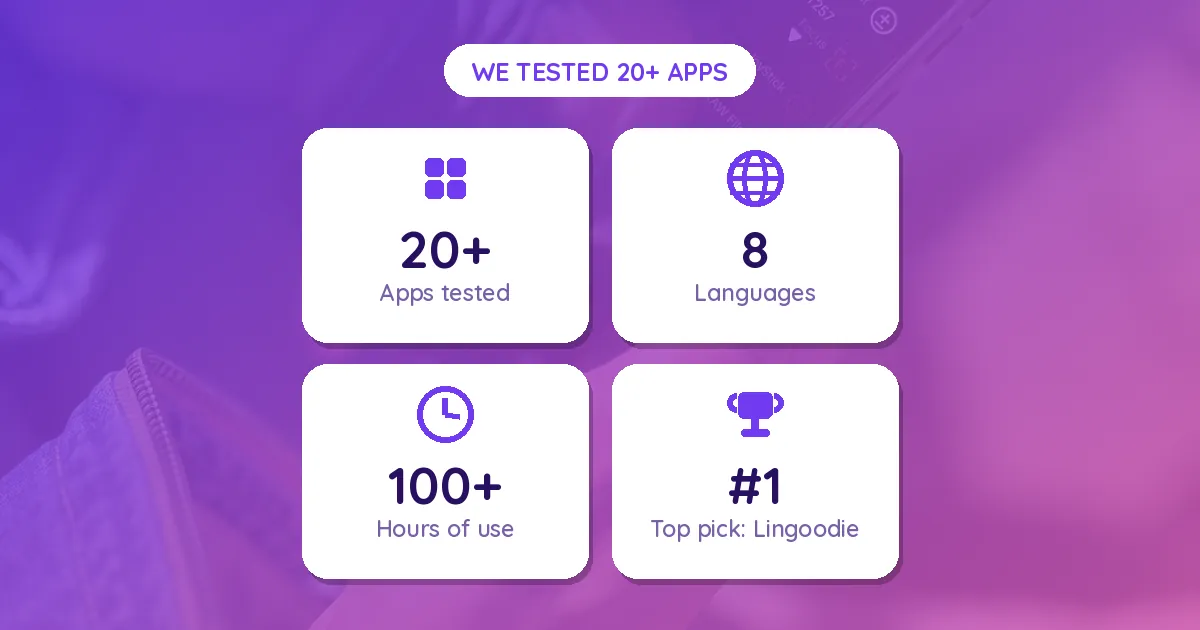
We've tested the major language learning apps on the market, including Duolingo, Babbel, Pimsleur, Rosetta Stone, Memrise, and Busuu, to cut through the noise. Here's what actually works, what each app is best for, and how to choose the right one for your situation.
Duolingo: the app everyone knows (and why it works)
Duolingo is the default recommendation for a reason. It's not perfect, but it's genuinely fun and it gets people to actually show up.
The core experience is simple: short, gamified lessons with a mascot owl that will hound you daily if you miss a session. The streak system taps into something real. You don't want to break a 100-day streak, so you open the app even when motivation is low. That kind of consistency matters more than almost anything else in language learning.
For Spanish, French, and Portuguese, Duolingo covers the basics well. You'll build common vocabulary, get comfortable with present and past tense, and start recognising patterns. The listening comprehension feature is solid, and the speaking exercises push you to produce language rather than just recognise it.
The limitation: Duolingo plateaus. After a few months, you've covered most of what the app offers. It's built to be engaging and sticky, not to take you to fluency. Most serious learners use it as a consistency tool and then layer in other resources for depth.
On cost: Duolingo is completely free with ads. Duolingo Plus removes ads, but you don't need it to make progress.
Babbel: for structured, topic-based learning
Babbel teaches by topic and real-world scenario rather than daily streaks. A lesson on "at the restaurant" covers vocabulary, grammar, listening, and speaking practice around that single theme. By the end, you can actually order food.
This approach pays off quickly if you have a specific goal. If you're travelling to Spain in six weeks and need practical Spanish, Babbel is more efficient than Duolingo because it prioritises conversational language over abstract vocabulary lists.
The tradeoff is cost. Babbel is entirely subscription-based; the free version covers only a handful of lessons. Expect to pay around 13 to 15 euros per month, or less with an annual plan. The return on that investment depends on how consistently you actually use it.
Babbel works best for learners with a concrete goal, a trip, a job, a family situation, who will commit to completing the courses. It's less effective if you're casually curious.
Pimsleur: for listening and speaking first
Pimsleur's method is built around listening and speaking before reading and writing. Native speakers play audio, you repeat and respond, and gradually you internalise the sounds and rhythm of the language. The approach draws on Krashen's comprehensible input theory and spaced repetition, both well-supported by learning research.
For speaking fluency specifically, Pimsleur is the strongest option we tested. Learners who stick with it consistently can hold basic conversations noticeably faster than those using grammar-first apps.
The downside is price. Subscriptions start around 19 euros per month, more than most competitors. The audio-only format also means no gamification or visual feedback, which can feel dry if you rely on progress indicators to stay motivated.
Pimsleur suits disciplined adult learners who prioritise speaking over reading and grammar, and who don't need a streak counter to keep them going.
Rosetta Stone: the premium, immersive option
Rosetta Stone has been around for decades. Its immersion method shows you images and asks you to figure out what words mean without translation, on the theory that your brain learns language the way children do.
It works, but it's slow. You'll build vocabulary and intuitive grammar over time. The pace is deliberate rather than quick, and the pricing reflects the positioning: subscriptions run to 20 to 30 euros per month or more, with lifetime access available for around 200 euros upfront.
If you have the budget and genuine patience for a thorough, long-term approach, Rosetta Stone produces solid results. If you need to see progress in weeks rather than months, it's probably not the right fit.
Memrise: vocabulary-first, with native speaker video
Memrise is built around spaced repetition for vocabulary. Words appear at scientifically-timed intervals designed to move them into long-term memory. The app also includes short video clips of native speakers using the words in real contexts, which helps bridge the gap between textbook pronunciation and how people actually talk.
It does one thing very well: building vocabulary fast. The limitation is that it's mostly just vocabulary. Memrise won't teach you grammar in any depth, and you won't learn how to construct sentences from the ground up.
The free version is functional, but the most useful features (offline access, ad-free learning) sit behind a paid subscription of around 10 to 12 euros per month.
Busuu: for practice with real people
Busuu includes a social layer that most apps skip. You complete exercises, native speakers in the community review and correct your written work, and you review theirs in return. It's not a tutor, but it's a step closer to real feedback than practising with an algorithm.
If you want genuine human input alongside your app practice, Busuu is worth trying. The free version is decent enough to get a feel for the experience, but the community correction feature, which is the main differentiator, requires a paid subscription of around 10 to 13 euros per month.
Lingoodie: the only app that pays you to learn
Lingoodie works differently to every other app on this list. You download it free from Google Play or the App Store, complete lessons in Spanish, French, or Portuguese, and you earn points. When you reach certain thresholds, you withdraw real USD directly to Revolut, instantly and with no fee, once you clear a 2,500 point minimum. PayPal is also available, with a higher 100,000 point minimum, 1 to 3 business day processing by PayPal.
It won't replace your salary. But it is real money, and that changes the psychology of the daily habit in a way that streak counters often don't.
The model is straightforward: lessons take around 5 to 10 minutes, you earn points on completion, and you can watch a rewarded ad to earn extra. The app is free with no subscription. Revenue comes from ads users voluntarily watch, and that revenue goes back to the learner. We built Lingoodie because we wanted to solve the motivation problem, the reason most people abandon language apps after a few weeks.
There's also a referral programme: you earn 5% of whatever your friends earn for life, which creates a genuine long-term reason to share the app. If you want more detail on how the earn mechanic works, read our post on apps that pay real money.
The honest limitation: Lingoodie is newer than Duolingo or Babbel and doesn't have the same content depth. It works best as your daily consistency tool, paired with other resources for deeper grammar and vocabulary.
How to choose the right app for you
The best app is the one you'll actually use consistently, not the one with the most features or the highest-rated reviews.
If you want something free and respond well to gamification and streaks, Duolingo is the natural starting point. Treat it as a consistency habit and add other resources when you plateau. If you have a specific goal with a deadline, Babbel is more efficient because it teaches language you can use immediately rather than building slowly from abstract foundations.
If speaking is your priority and you're disciplined enough for audio-only learning, Pimsleur will get you to conversational faster than anything else on this list. If you're willing to invest time and money for a thorough, immersive approach without needing fast results, Rosetta Stone is thorough. For vocabulary building, Memrise is excellent at that one job. For real human feedback alongside app practice, Busuu provides it.
And if you want to actually earn money while you practise, Lingoodie is the only app on this list that does that. We tested the model in detail in our post on whether you can actually get paid to learn a language.
The honest bottom line
None of these apps will make you fluent on their own. Fluency takes months of sustained effort, exposure to native content, and real conversations. What these apps do is lower the barrier to daily practice and make it easier to build the habit that makes progress possible.
Pick one that fits your goals and your personality, and use it consistently. An average app used every day will outperform the technically "best" app that sits unopened on your phone.