How to Practise Speaking Arabic When You Have Nobody to Speak To
I have nobody to practise with
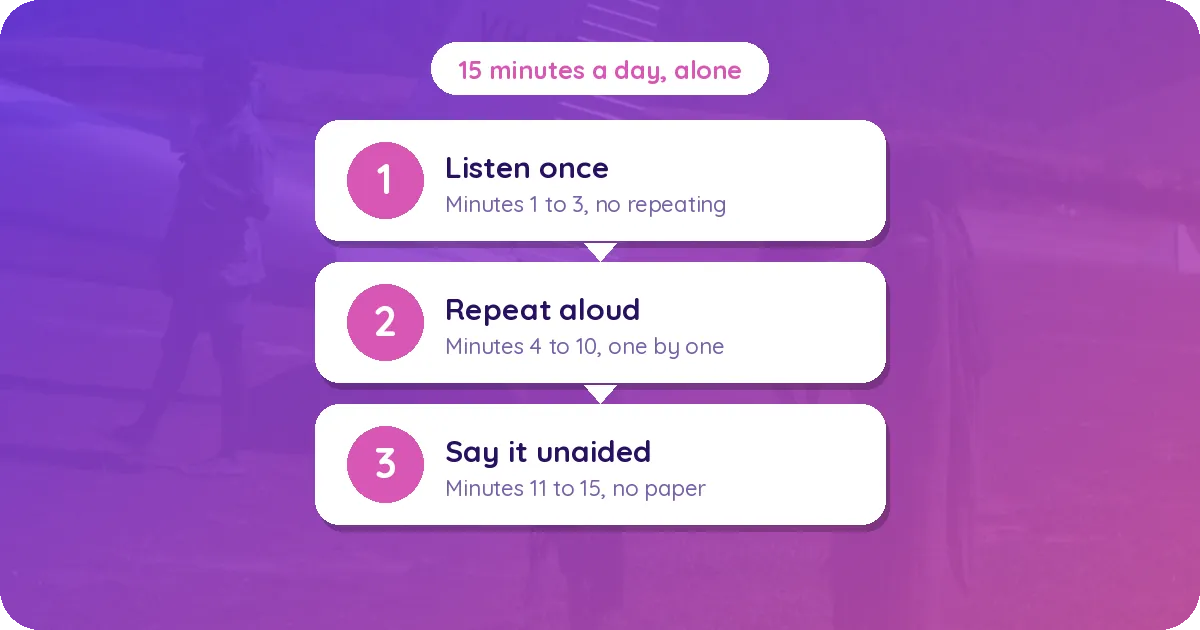
After learning the alphabet and individual words, a question comes up again and again, whether you ask it of yourself or of your teacher: "I don't have anyone to practise speaking with." So you stop learning altogether, waiting until you find a suitable partner to practise Arabic with, and by the time you find one you have forgotten what you learned. I promise that after reading this article, you will know exactly what to do starting tomorrow.
Why talking to yourself works
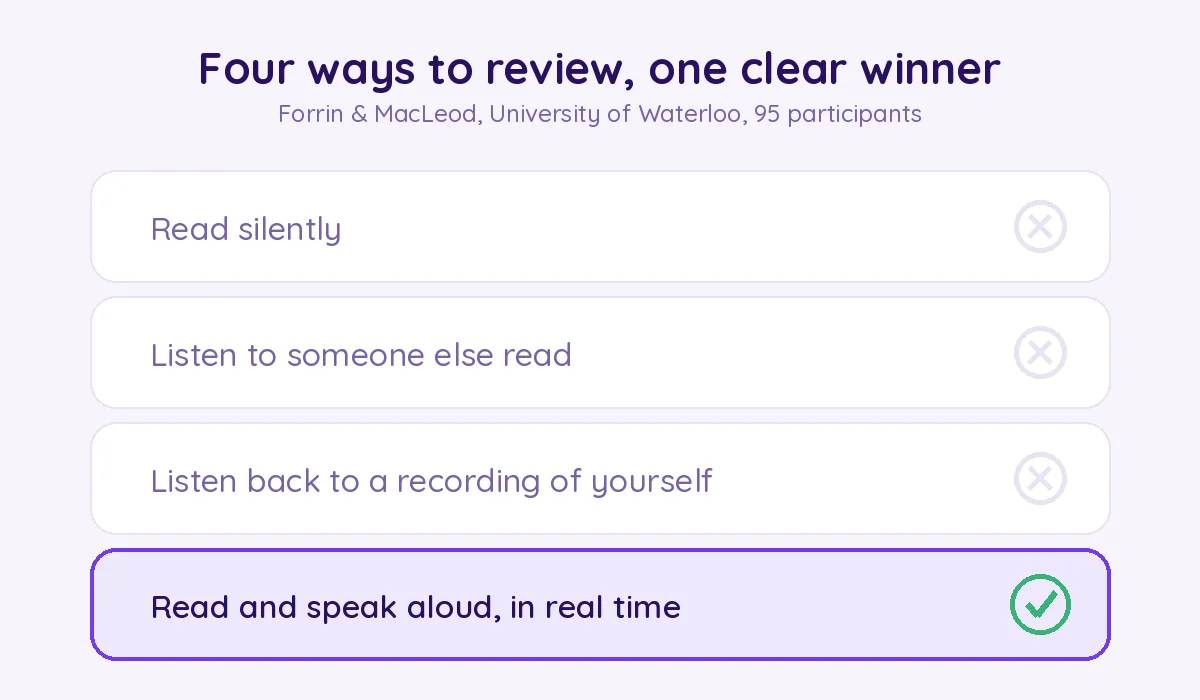
A study published in the journal Memory, carried out by Noah Forrin and Colin MacLeod at the University of Waterloo, tested this directly.
The researchers tested 95 participants using four different ways of taking in and reviewing information:
- Reading silently.
- Listening to someone else read.
- Listening to a recording of yourself reading.
- Reading and speaking aloud in real time.
Reading and speaking aloud in real time produced the best recall. Listening back to a recording of yourself helps, but speaking aloud in the moment beats it, because it combines two things: the physical act of speaking, and hearing your own voice as you do it. That combination makes the words stand out in long-term memory.
If you only read silently in your head and then try to speak to someone, you will stumble, because you are not used to it. Train yourself to read aloud and speaking spontaneously with anyone becomes easy.
A note on the examples
Every example below is in Arabic, in Modern Standard Arabic, the form you will meet in textbooks, news and documentaries. The method itself works for any language you are learning, so take the shape of each exercise and swap in your own.
Each table gives you the Arabic, then a transliteration, then the English. The transliteration uses the numeral 3 for the letter ع, a sound English does not have. This is normal practice when Arabic is written in Latin letters.
1. Narrate your day
Say what you are doing, as you do it. Start with single sentences and build up.
Absolute beginner
المستوى المبتدئ
| Arabic | Transliteration | English |
|---|---|---|
| أنا في العمل | ana fil-3amal | I am at work |
| أنا متعب | ana mut3ab | I am tired |
| أنا سعيد | ana sa3eed | I am happy |
| أنا أكتب رسالة | ana aktub risaala | I am writing a message |
Intermediate
المستوى المتوسط
| Arabic | Transliteration | English |
|---|---|---|
| بعد العمل سأمر على البقالة | ba3da al-3amal sa-amurru 3ala al-baqqaala | After work I will stop by the grocery store |
| عندما وصلت إلى البيت أعددت عشاءً وشاهدت فيلمًا | 3indama wasaltu ila al-bayt a3dadtu 3ashaa'an wa-shahadtu filman | When I got home I made dinner and then watched a film |
| أنا متعب قليلاً فقررت أن أنام بدري | ana mut3ab qaleelan fa-qarrartu an anaam badri | I am a bit tired so I decided to sleep early |
2. Answer questions out loud
Ask yourself the questions a stranger would ask you, and answer them aloud.
| Arabic | Transliteration | English |
|---|---|---|
| ما اسمك؟ | ma ismuk? | What is your name? |
| اسمي ... | ismi ... | My name is ... |
| من أين أنت؟ | min ayna anta? | Where are you from? |
| أنا من مصر | ana min misr | I am from Egypt |
| ما جنسيتك؟ | ma jinsiyyatuk? | What is your nationality? |
| أنا مصري | ana misri | I am Egyptian |
Making the cards
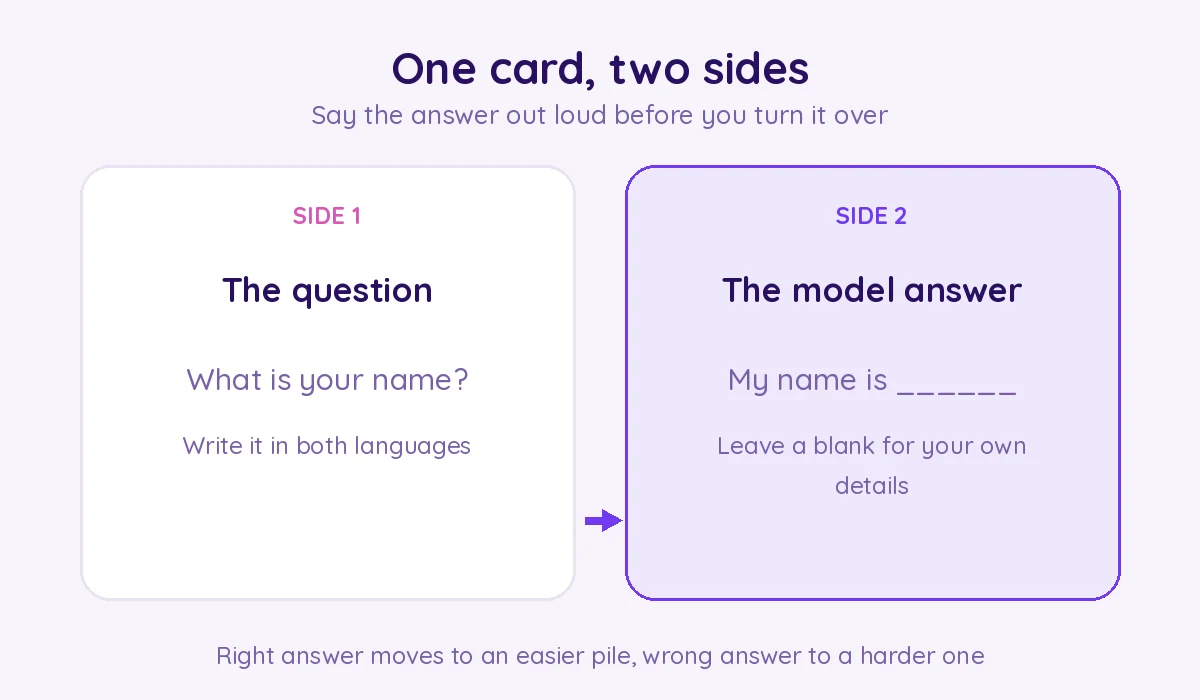
Use cardstock or small index cards.
Side one, the question. Write it in both Arabic and English, exactly as in the table above.
Side two, the answer. Write the model answer, leaving a blank space for your name or your own details.
Sorting the cards into three groups
Split the cards into three piles as you study:
- Group A, easy. Questions you answer at once, without hesitating.
- Group B, medium. Questions you get to slowly, or sometimes get wrong.
- Group C, difficult. Questions you do not know, or cannot pronounce.
Read the question on side one aloud, then say the answer aloud before you turn the card over to check it. A card you get right moves to an easier pile. A card you get wrong moves to a harder one. Repeat this every day until every card sits in group A.
3. Record, listen, redo
One letter learners almost always get wrong is ح. They tend to say it like ه instead, and you hear it most often in the word habeebi: حبيبي
Recording yourself and listening back is how you catch that. The first time, you will feel self-conscious: you will hear yourself pausing a lot, or saying things that are unclear. Do not worry, and keep going. You get used to it, and after a while you start to hear the difference and your own progress.
4. Shadowing
The best material to imitate is documentaries, or Arabic programmes that tell true stories. They give you correct pronunciation and a narrative built from common vocabulary, without the distortion you get elsewhere. Al Jazeera Documentary is a good example.
5. Your daily routine for tomorrow
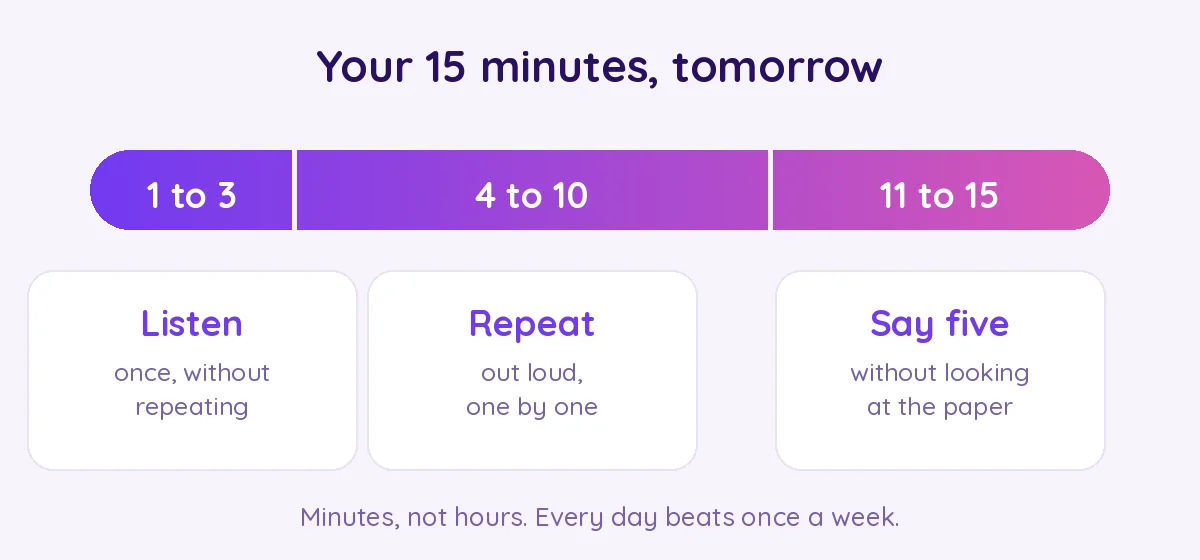
Minutes 1 to 3
اسمع الجمل مرة واحدة بدون ما تردد
Listen to the sentences once, without repeating them.
Minutes 4 to 10
ردد الجمل بصوت عالي واحدة واحدة
Repeat the sentences out loud, one by one.
| Arabic | Transliteration | English |
|---|---|---|
| أنا أُعِدُّ القهوة الآن | ana u3iddu al-qahwa al-aan | I am making coffee right now |
| أنا في المترو | ana fil-metro | I am on the metro |
| أنا آكل | ana aakul | I am eating |
| أنا أشرب الشاي | ana ashrab ash-shay | I am drinking tea |
Minutes 11 to 15
قل خمس جمل من غير ما تبص على الورقة
Say five sentences without looking at the paper.
| Arabic | Transliteration | English |
|---|---|---|
| أنا استيقظت مبكراً اليوم ثم أعددت القهوة | ana istayqaztu mubakkiran al-yawma thumma a3dadtu al-qahwa | I woke up early today, then I made coffee |
| بعد أن شربت القهوة لبست وخرجت | ba3da an sharibtu al-qahwa labistu wa-kharajtu | After I drank the coffee I got dressed and went out |
| أنا في المترو الآن وأنتظر الذهاب إلى العمل | ana fil-metro al-aan wa-antazir al-dhahab ila al-3amal | I am on the metro now, waiting to go to work |
| كان العمل مزدحماً اليوم ولهذا تأخرت | kana al-3amal muzdahiman al-yawma wa-lidha taakhartu | Work was busy today, that is why I was late |
| عندما وصلت البيت أعددت العشاء ثم شاهدت فيلماً | 3indama wasaltu al-bayt a3dadtu al-3asha thumma shahadtu filman | When I got home I made dinner and then watched a film |
6. Mistakes I hear from students
| The mistake | Wrong | Right |
|---|---|---|
| Using the country instead of the nationality, so "I am Turkey" rather than "I am Turkish" | أنا تركيا | أنا تركي |
| Swapping the pronouns, so "I eat pizza" when you mean "he eats pizza" | أنا آكل بيتزا | هو يأكل بيتزا |
| Using the singular instead of the plural, so "three meal" rather than "three meals" | ثلاث وجبة | ثلاث وجبات |
Closing
You simply need to speak aloud, listen to yourself, and repeat. Narrate your day in simple Arabic sentences, ask yourself questions and answer them, record your voice so you can hear what to correct, and copy speakers who pronounce things properly, documentary narrators above all. Fifteen minutes a day is enough. Start tomorrow, rather than waiting until you find someone to talk to.