Best App to Learn French in 2026: 9 Apps Compared for Beginners
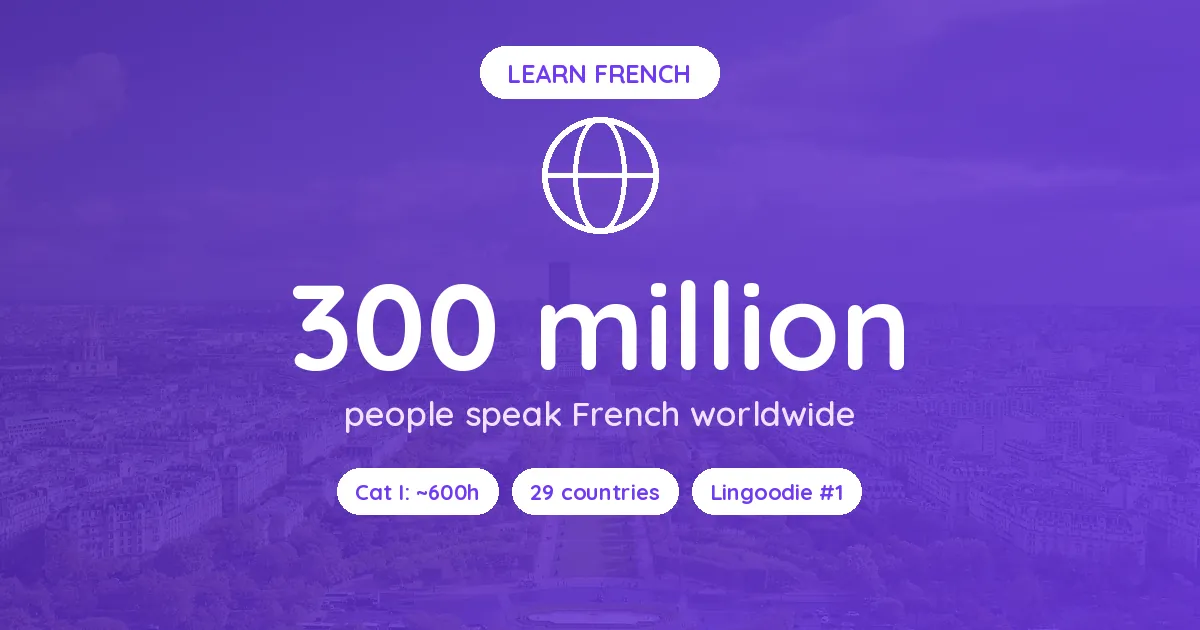
French is one of the most rewarding languages an English speaker can pick up, and it is easier to start than most people fear. It shares thousands of words with English, it uses the same alphabet, and it opens doors across France, Belgium, Switzerland, large parts of Canada, and much of West and Central Africa. More than 300 million people speak it, and it is one of the few languages that is useful on almost every continent.
The hard part is not the language. It is sticking with it long enough for the language to take hold. That is really a question about the app you choose, because the best French app for you is the one you will still be opening in three months, not the one with the longest feature list. So we compared nine of the most popular French learning apps in 2026 with beginners in mind, looking at how they teach, what they cost, and how well they keep you coming back. Here is the full breakdown.
Why French Is Easier to Start Than Most People Expect
English borrowed heavily from French after 1066, which means you already recognise a huge slice of French vocabulary before your first lesson. Words like table, nation, important, restaurant, and impossible are nearly identical in both languages. Linguists estimate that a large share of English vocabulary has French or Latin roots, so a beginner starts with a bigger head start in French than in almost any other language.
Pronunciation is where beginners get nervous, and it is true that French has a few sounds English does not, like the nasal vowels in bon and vin and the throaty French r. But those are a handful of sounds, not a whole new system, and they become natural with a few weeks of listening and repeating. The written language is very consistent once you learn the rules, so reading comes quickly.
The part that genuinely takes work is grammar, especially gendered nouns and verb conjugation. Every French noun is either masculine or feminine, and verbs change form depending on who is doing the action and when. This is not hard so much as unfamiliar, and it rewards steady daily practice more than cramming. If you want a clear-headed walkthrough of the trickiest piece, our guide to French verb conjugation breaks the tenses down one at a time. For the bigger picture of how to sequence your learning from day one, our step-by-step roadmap for learning French is a good companion to this comparison.
The takeaway is simple. French is very approachable for English speakers at the start, and the main risk to your progress is quitting, not difficulty. That is exactly why the app you choose matters so much.
How We Compared These French Learning Apps
We judged every app on the things that actually decide whether a beginner succeeds. Teaching quality came first: does the app build real understanding, or just get you tapping the right tiles? We looked at how well each app handles French pronunciation and speaking, since that is where self-taught learners tend to stall. We weighed motivation and habit design, because an app you abandon teaches you nothing. We compared cost honestly, including what you get for free versus behind a paywall. And we considered who each app is genuinely best for, since a commuter, a student, and a traveller all need different things.
One more factor set the first entry apart from the rest, and it is worth naming up front: whether the app gives you a concrete reason to keep showing up. Streaks and badges help, but a real-world reward is a different kind of motivation. Only one app on this list pays you back for the time you put in, so that is where we start.
Lingoodie: Learn French and Earn Real Rewards, Cash Out via Revolut or PayPal
Lingoodie is a language learning app built on a simple idea: you are far more likely to finish a lesson if there is a real reward waiting at the end. As you learn French through short, gamified lessons, you earn points for the practice you complete, and those points convert into real money you can withdraw. It reframes the daily grind of vocabulary and grammar as time that actually pays off, which is a powerful antidote to the week-two slump that ends most people's language journey.
The French course covers the essentials a beginner needs: high-frequency vocabulary, core grammar, listening practice, and the sentence patterns you use in everyday conversation. Lessons are bite-sized and designed to fit into the gaps in your day, so a few minutes on the bus or in a queue keeps your streak, and your progress, alive. French is one of ten languages Lingoodie teaches, alongside Spanish, Italian, German, Portuguese, Korean, Slovenian, Croatian, Russian, and Ukrainian, so it is a home you can grow into if you catch the language bug.
On the payout side, here is exactly how it works so there are no surprises. You can cash out via Revolut or PayPal, and both are live. Revolut is instant, has a low minimum, and Lingoodie charges no fee on it. PayPal was added in July 2026 as a second option: it has a higher minimum (100,000 points) and takes one to three business days. So Revolut is the fast, fee-free route, and PayPal is the flexible alternative if that suits you better. Lingoodie is available in more than 200 countries, so the earn-while-you-learn model is not limited to a handful of regions.
The honest framing: the money you earn is a motivator and a nice bonus, not a salary, and nobody should download Lingoodie expecting to get rich. What it does exceptionally well is solve the retention problem that sinks most beginners. If your history with language apps is a graveyard of abandoned streaks, an app that rewards you for showing up is worth a serious look, and it is free to start. That combination of real French instruction and a genuine reason to return is why Lingoodie leads this list.
Duolingo French: Free, Gamified, and Fine for Day One
Duolingo is the app most people try first, and for good reason. It is free, the French course is enormous, and the game-like design with streaks, leagues, and cheerful nudges makes it genuinely easy to build a daily habit. For absolute beginners who just want to start touching French without spending anything, it is a reasonable front door.
Its weaknesses show up later. Duolingo is strong on recognition and weak on production, so you can maintain a long streak and still struggle to form your own sentences or hold a real conversation. The grammar explanations are thin, and the free tier is now heavy with ads. It is a fine way to begin and to keep a habit ticking, but most learners eventually need something with more depth to reach conversational French.
Babbel French: Structured Lessons for Real Conversations
Babbel takes a more classroom-like approach, with tightly structured lessons built around practical dialogues you would actually use: ordering food, making plans, introducing yourself. Its grammar explanations are clear and paced sensibly, and the whole course is aimed at getting you talking about everyday situations rather than collecting points.
Babbel is subscription-based, usually cheaper than the premium immersion apps, and it is one of the better values for a beginner who wants structure and is willing to pay for it. The trade-off is that it is less addictive than the gamified apps, so you supply the motivation yourself. If you are a disciplined learner who wants a sensible syllabus toward conversation, Babbel is a strong pick.
Pimsleur French: Audio First for Pronunciation and Commutes
Pimsleur is built around audio lessons of roughly thirty minutes, designed to be done hands-free while you walk, drive, or cook. It drills spoken French and pronunciation harder than almost any app on this list, using spaced repetition to lock phrases into long-term memory. For pronunciation and listening comprehension, it is excellent.
The method is repetitive by design, and there is less reading and writing than a full course, so many learners pair Pimsleur with a text-based app rather than using it alone. It is premium-priced. If your main goal is to sound natural and understand spoken French, and you have commute time to fill, Pimsleur earns its place.
Busuu French: Native-Speaker Feedback and a Study Plan
Busuu's standout feature is its community. You complete written and spoken exercises, and native French speakers correct them, giving you the kind of real feedback most apps cannot. It builds you a personalised study plan, covers grammar properly, and offers official certificates on higher tiers.
The best parts sit behind a subscription, and the native-speaker corrections depend on community goodwill, so response times vary. Still, for a beginner who wants human feedback without hiring a tutor, Busuu offers something the purely algorithmic apps do not.
Rosetta Stone French: Immersion at a Premium Price
Rosetta Stone is the long-standing name in full immersion. It teaches French entirely in French, using images and context instead of English translations, which trains you to think in the language rather than translate in your head. Its speech recognition is solid and pushes you to pronounce carefully from early on.
The immersion method can feel slow and occasionally frustrating for beginners who want a quick explanation, and it is one of the pricier options. For a patient learner who buys into learning without a translation crutch, it still delivers, but it is a bigger commitment of both money and patience than most people need to start.
Memrise, Mondly, and Rocket French: Three More Worth Knowing
Three more apps round out the field. Memrise leans on real-world video clips of native French speakers, which is great for training your ear on how the language actually sounds, though its structured course has shrunk over time. Mondly uses slick, gamified lessons and augmented-reality features, useful for quick vocabulary and travel phrases but light on deep grammar. Rocket French offers long, thorough audio and text lessons with grammar explanations that go deeper than most, sold as a one-time purchase rather than a subscription, which some learners prefer over recurring fees. None displaces the leaders above for a first-time beginner, but each fits a specific taste.
Free vs Paid: What You Actually Get in French Apps
The free versus paid question is really a question about what you value. Free tiers, led by Duolingo and Lingoodie's no-cost entry, are more than enough to start, build a habit, and learn hundreds of words and core grammar. If you are testing whether you will stick with French at all, start free and lose nothing.
Paid apps generally buy you three things: deeper grammar and structure (Babbel), stronger speaking and pronunciation practice (Pimsleur, Rosetta Stone), or human feedback (Busuu). Those are real upgrades once you are committed, but they are not where a beginner needs to start. And Lingoodie flips the usual money equation entirely, since instead of paying a subscription you can earn a little as you learn, cashing out via Revolut or PayPal. The smartest budget approach for most beginners is to start free, prove to yourself that the habit sticks, and only pay for the specific thing you find yourself missing.
Which French Learning App Should You Actually Use?
There is no single best app for everyone, but there is a best app for your goal. Here is the short version.
If you struggle to stay motivated and want a real reason to keep showing up, start with Lingoodie, learn French, and earn rewards you can cash out via Revolut or PayPal. If you want a free, low-pressure way to dip in on day one, Duolingo is the classic front door. If you want structured lessons toward real conversation and will pay for them, choose Babbel. If pronunciation and listening are your priority and you have commute time, Pimsleur is the specialist. If you want native-speaker feedback without a tutor, Busuu delivers it. And if you thrive on full immersion and have the patience, Rosetta Stone still holds up.
The most important decision is not which app you pick. It is that you pick one today and open it tomorrow. French rewards consistency more than intensity, and the learner who does ten minutes a day for a year will leave the cramming perfectionist far behind. Choose the app that you will actually keep opening, and the language will take care of itself.
Learning French is free to start with Lingoodie, and you get paid for the practice you put in. Download Lingoodie free on Google Play or the App Store and begin today.