How to Learn Spanish Fast: 12 Methods That Actually Work

You want to learn Spanish fast. Not "eventually." Not "someday." Now. Maybe you're moving to Madrid in six months, or your partner's family speaks it, or you're just tired of feeling left out when people switch languages. The good news: Spanish is learnable at speed if you know what you're doing. The bad news: the internet is full of people selling you shortcuts that don't exist.
There are no three-minute miracle methods. There's no "absorb Spanish while you sleep" hack that's going to make you conversational. But there are research-backed approaches that will get you speaking and understanding Spanish significantly faster than the traditional "study one hour a week" approach. The difference isn't magic, it's method.
This guide covers the principles that actually accelerate language learning, why they work, and how to apply them immediately. If you're serious about Spanish fluency on a faster timeline, these aren't just tips. They're what the science says works.
The First Principle: Immersion Beats Everything (But You Don't Need to Move)
Immersion is the fastest way to learn a language because your brain has no choice but to adapt. When you're surrounded by Spanish all day, you learn Spanish faster than any app or textbook can teach you. This is why people who move to Spain suddenly become fluent in months while people studying at home for years plateau.
The catch: most people can't move to Spain. So the question becomes: how do you create immersion at home?
Real immersion means surrounding yourself with Spanish in ways that force engagement. This isn't passive background noise. It's active, often uncomfortable exposure where you're constantly hearing, reading, and trying to produce Spanish. The discomfort is the point, your brain learns fastest when it's slightly stressed.
Start by switching your phone's language to Spanish. Not as a gimmick. Genuinely use it in Spanish for a week. You'll be shocked at how fast you learn vocab when you need to navigate your own device. Then change your social media feeds to Spanish-language content. Not educational content, real content. Memes, news, sports, whatever you actually care about but in Spanish. Your brain learns language better when the content is interesting to you, not when it's optimized for learners.
Watch Spanish movies and shows, but not with English subtitles. This is crucial. English subtitles let your brain switch off and just read. Spanish subtitles force you to listen and read, which is harder and more effective. You won't understand everything. That's correct. You're not supposed to. You're training your ear and your pattern recognition. After a few shows, you'll be astonished at what you're picking up.
This creates something close to immersion without leaving your house. It won't give you fluency, but it accelerates your learning dramatically by training your ear and your reading comprehension simultaneously.
Spaced Repetition: The Boring Secret That Multiplies Results
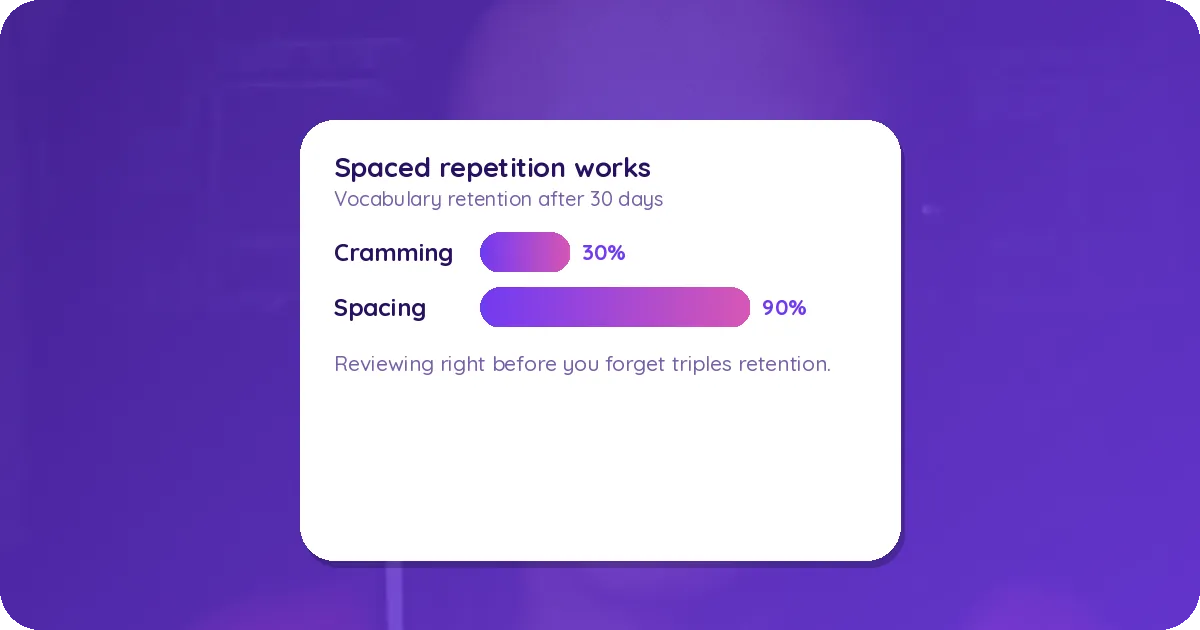
Spaced repetition is the most well-researched learning technique in cognitive science. The principle is simple: you review information at intervals specifically timed to maximize memory retention. Instead of studying the same material repeatedly in one session, you space out your reviews. The first review happens after a day. The next after three days. Then a week. Then two weeks. Each time you review, you refresh your memory just before you're about to forget.
This isn't how most people study languages. Most people cram, then forget most of what they learned. Spaced repetition is slower in the short term (you study less each day), but radically faster in the long term (what you learn actually sticks).
Apps like Memrise and Anki handle this automatically. You add vocabulary or phrases, and the app determines when you review each one based on algorithms proven to maximize retention. Studies show spaced repetition increases vocabulary retention by 200-300% compared to massed practice (studying the same thing multiple times in a row).
The practical application: spend 10-15 minutes daily on spaced repetition for vocabulary and phrases. Don't try to learn 100 words a day. Learn 20 and let the spacing algorithm handle the rest. Your memory will compound over months in ways that feel impossible after the first few weeks.
Comprehensible Input: Understanding Without Translation
Stephen Krashen's research on comprehensible input changed language learning science. His core finding: you acquire language through input you understand, not through grammar rules. This is why children learning their first language learn so fast, they're surrounded by language they can mostly understand (with a little bit of new material to learn from context).
The challenge in language learning is finding input that's comprehensible but not boring, challenging but not incomprehensible. Too easy and you learn nothing new. Too hard and your brain shuts down.
The solution: seek out Spanish content that's slightly above your current level. If you're a beginner, watch YouTube channels designed for Spanish learners (like Easy Spanish or SpanishPod101). These are made with comprehensibility in mind. You'll catch maybe 50% without subtitles. That 50% comprehension, plus context, is how your brain acquires new vocabulary and grammar patterns.
As you improve, gradually transition to authentic Spanish content, real TV shows, podcasts made for native speakers, YouTube channels not designed for learners. The transition point is when you can follow the gist without constant confusion. Push into content that's harder than what feels comfortable. This is where acquisition happens.
The key is consistency. Twenty minutes of comprehensible input daily is more powerful than six hours of hard studying once a week. Your brain needs regular exposure to build patterns.
Output Practice: Speaking Before You're Ready
Most language learners spend 80% of their time on input (reading, listening) and 20% on output (speaking, writing). This is backwards. You acquire language through input, but you fluency through output. Speaking and writing force you to produce language, which solidifies what you've learned and reveals what you don't know yet.
The problem: you're terrified of speaking Spanish when you can barely say hello. This fear is the biggest brake on learning speed.
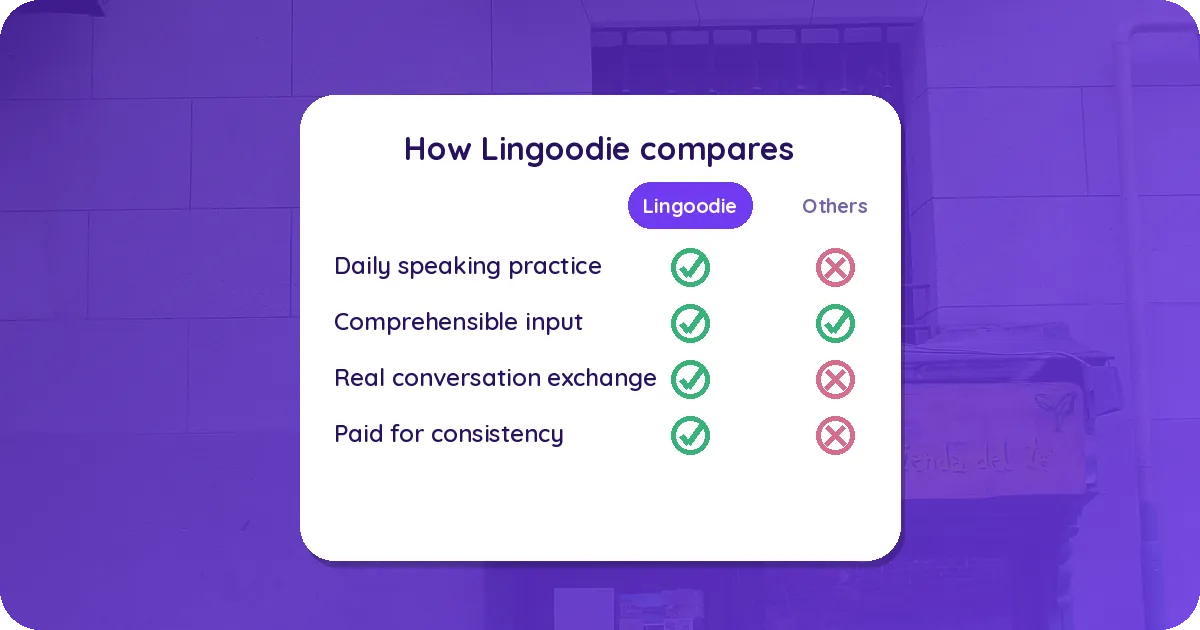
The solution: start speaking immediately, even when you're terrible. Join a conversation exchange like Tandem or HelloTalk where you connect with Spanish speakers learning your language. You don't have to be advanced. You can literally say "My Spanish is very bad. I am learning. Can you correct me?" in Spanish (Google Translate is fine for setup) and most native speakers will be patient and happy to help.
Consider italki for structured conversation practice with teachers. A 30-minute lesson costs $5-15 depending on the teacher. This is the cheapest way to get real conversation practice. You will stumble. You will feel stupid. This is the point. Your brain learns fastest when it's producing language imperfectly.
Even without a partner, practice speaking alone. Record yourself reading Spanish text aloud. Compare your pronunciation to native speakers on YouTube. Do it daily. Speaking alone feels silly, but it's more effective than you'd expect because you're still producing output.
Consistency Over Intensity: The Compound Effect of Daily Practice
This might be the most important principle on this list. Learning Spanish fast doesn't mean learning Spanish all day once a week. It means learning Spanish every single day, even if just for 20 minutes.
Your brain consolidates language during sleep. If you study Spanish for three hours on Saturday and nothing the rest of the week, you lose most of what you learned because there's no reinforcement. If you study 20 minutes daily, you're constantly refreshing your memory and giving your brain repeated chances to consolidate.
This is where most people fail. They're enthusiastic at first. They do an hour a day for two weeks. Then life happens and they stop. Three weeks later, they realize they've forgotten half of what they learned. The cost of restarting is so high that many people quit entirely.
The solution is ruthless consistency around a small daily goal. Not "I'll learn Spanish for an hour every day" (you won't). Something like "20 minutes of Spanish every single day, no exceptions." You can do 20 minutes. You do it at lunch, before bed, on the train, anywhere. The consistency matters more than the duration.
Set a daily reminder. Use a habit app if it helps. Mark off a calendar every day you practice. Make it non-negotiable, like brushing your teeth. After 30 days, it becomes automatic. After 90 days, it's just part of your routine.
This consistency creates a compounding effect. Month one, you're learning basics. Month two, you're reviewing while building. Month three, the reviewing compounds and your language understanding explodes. Month four, people are noticing you're actually conversational. This doesn't happen with intensity. It happens with consistency.
The Method that Keeps You Showing Up: Real Rewards
Here's the honest truth: motivation for language learning crashes hard around week three. The initial excitement wears off. You hit your first plateau. The effort-to-progress ratio feels terrible. This is when most people quit.
One of the most reliable ways to maintain consistency is external reward. Not internal motivation, external. Your brain cares about immediate payoff. Learning Spanish is a long-term goal. Your brain cares about today.
This is why apps with streaks, levels, and achievements work. They're not gimmicks. They're behavioral design. The streak system triggers loss aversion, you don't want to lose a 30-day streak, so you practice even when you're not excited. Achievements feel good, so you keep chasing the next one.
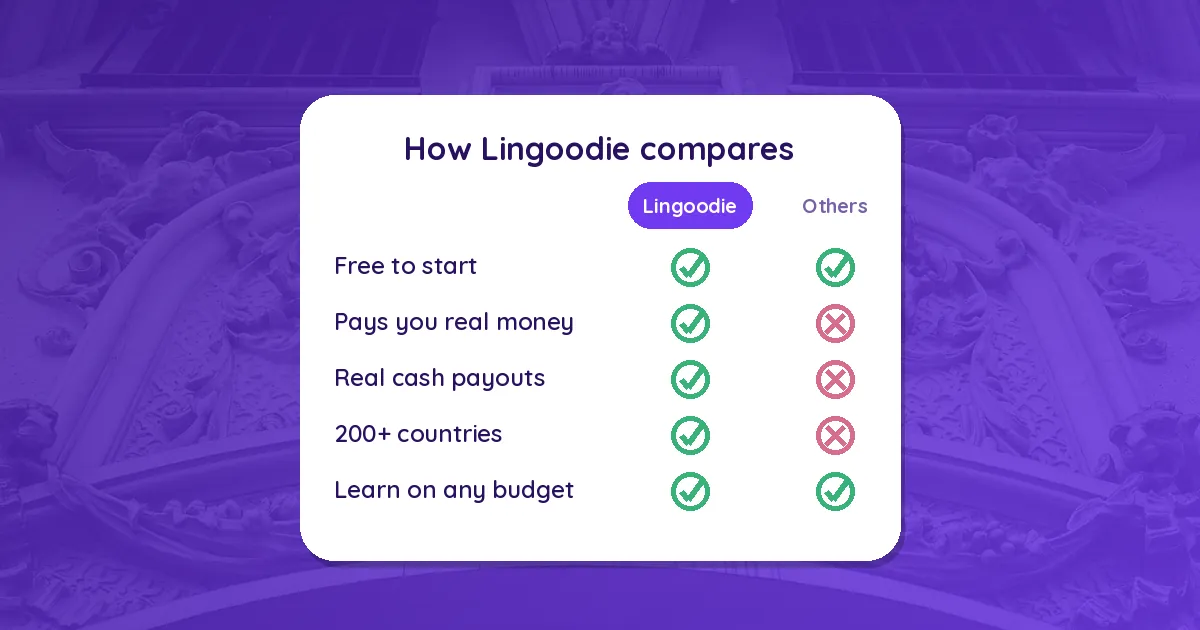
But what if the app actually paid you for practicing? This sounds crazy until you try it. Lingoodie is a free Spanish learning app (also French and Portuguese) that literally pays you real USD for practicing. It's one of the few apps that pay real money that doubles as a genuinely good learning tool, which is why we wrote a deep dive on whether you can actually get paid to learn a language. You complete lessons, earn points, watch ads if you want extra rewards, and withdraw real money to Revolut, instant and free once you hit the 2,500 point minimum, or to PayPal, which has a higher 100,000 point minimum and is processed by PayPal within 1 to 3 business days. No subscription. No cost from Lingoodie. Just free Spanish lessons that pay you.
The psychological effect is measurable. Getting paid (even small amounts, $1-5 a week) isn't about the money. It's about validation. Your learning is worth something. Your time studying is recognized as valuable. This small signal dramatically increases the likelihood you'll show up tomorrow. You're not studying Spanish because you should. You're studying Spanish because you're getting paid.
There's also a referral system, you earn 5% of everything your friends earn for life. This creates a long-term incentive beyond the daily studying. You're not just learning for yourself. You're building a network that benefits everyone.
For consistent daily practice, consistency tools matter more than content quality. An app that pays you will keep you showing up more reliably than a theoretically better app that doesn't. And consistency is what determines speed.
Chunking: Don't Learn "Spanish." Learn Conversations.
Instead of trying to learn Spanish as this massive, abstract skill, break it into smaller, specific pieces. Learn how to order food. Learn how to introduce yourself. Learn how to talk about your job. These aren't random skills, they're self-contained conversations.
This serves multiple purposes. First, you learn faster because you're learning meaningful chunks instead of random vocabulary. Second, you can actually use what you learn immediately. After a week of learning restaurant Spanish, you can go to a Spanish restaurant and have a basic conversation.
Third, each small success creates momentum. Learning all of Spanish feels impossible. Learning how to order coffee feels possible. When you succeed at coffee, you're motivated to learn the next micro-skill.
Pick five topics you care about. Learn those conversations thoroughly. Then pick five more. After a few months, you've covered the most common conversational territory without ever taking a traditional Spanish class.
Pronunciation Matters More Than You Think
English speakers often deprioritize pronunciation early on. This is a mistake. Bad pronunciation is a wall between you and fluency. Native speakers have a harder time understanding bad pronunciation than bad grammar. Grammar errors are forgivable. Bad pronunciation is frustrating to listen to.
Spend time on pronunciation from the beginning. Learn how Spanish R works (it's the hardest sound for English speakers). Learn the vowel sounds (which are consistent in Spanish, unlike English). Listen to native speakers and copy them obsessively. Record yourself and compare.
There are YouTube channels dedicated to Spanish pronunciation. Use them. Pronunciation practice takes 5-10 minutes a day and pays massive dividends in being understood.
The Timeline: What Realistic Speed Actually Looks Like
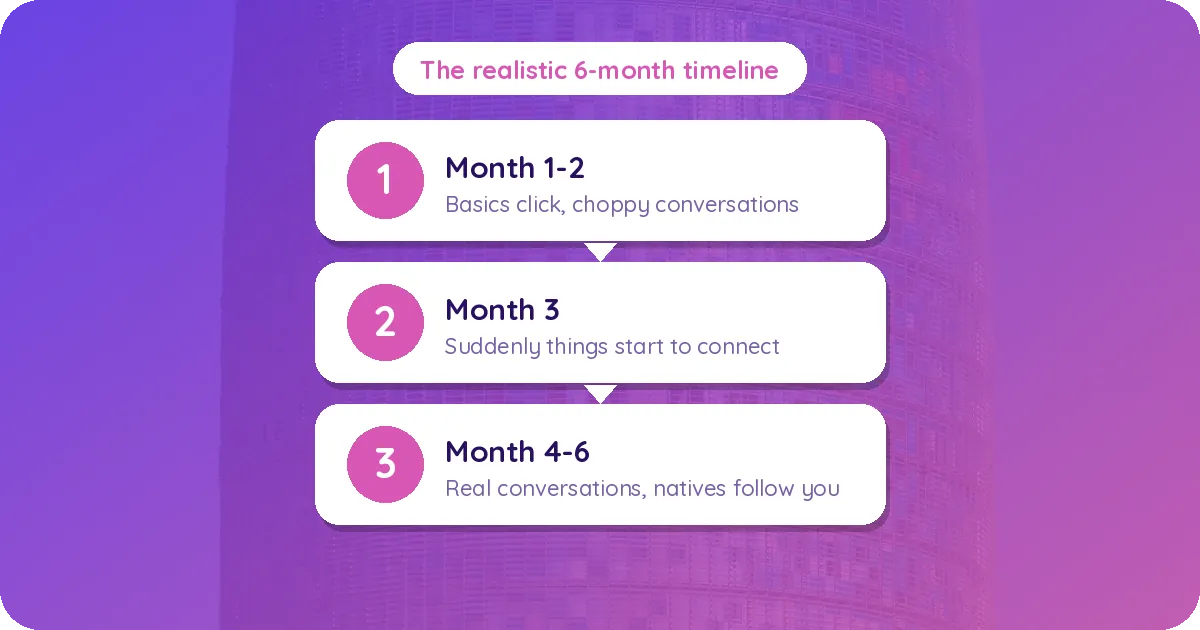
Here's the honest timeline if you do everything above:
Month 1: You learn basics. Greetings, numbers, present tense verbs, common vocabulary. By the end, you can introduce yourself and have a very simple conversation with someone who's patient. Your reading comprehension is rough. Your speaking is choppy. Most natives won't understand you on the first try.
Month 2: You start understanding TV shows at maybe 20-30%. You can have short conversations about basic topics. Grammar patterns are becoming intuitive. You're hitting your first plateau and wondering if this is working.
Month 3: Suddenly things click. You understand way more of what you're hearing. You can have actual conversations, not just recite memorized phrases. You're making mistakes constantly, but natives can follow you. This is where many people think "I'm actually learning this."
Month 4-6: You're building fluency. You can understand almost everything in context. You can speak about most topics, though you still search for words sometimes. Most natives understand you easily. You can watch Spanish TV and follow the plot without subtitles.
Month 6+: With continued practice, you're approaching conversational fluency. You're not mistaken for a native speaker, but you can function in Spanish without much stress.
This timeline assumes daily practice using the methods above. If you're skipping consistency (practicing three days a week instead of seven), add 50% to the timeline. If you're doing all the things but less intensity (10 minutes a day instead of 30), add 100%.
Speed is real, but it's a function of consistency, method, and focus. Not magic.
The Bottom Line
Learning Spanish fast is possible. It requires:
- Surrounding yourself with Spanish (immersion, even at home)
- Daily spaced repetition for vocabulary
- Consuming comprehensible input regularly
- Speaking imperfectly from day one
- Consistency over intensity (daily practice beats weekend marathons)
- External rewards to maintain motivation
- Focus on specific conversations, not "all of Spanish"
- Attention to pronunciation
You can do this. But you have to actually do it. The hardest part isn't the method. It's showing up every single day for months, feeling like you're not progressing fast enough, and continuing anyway.
For the daily consistency part, Lingoodie (free on Google Play and the App Store) removes one of the biggest barriers to showing up, it actually pays you for your practice. You're not studying because you feel obligated. You're studying because you're earning real money. That sounds small until you realize that motivation is everything when you're learning fast.
The methods above will accelerate your Spanish learning. The tool that keeps you showing up is what determines whether you actually finish what you started.
Download Lingoodie free from Google Play or the App Store and start earning real money while you learn Spanish consistently. You'll need the streak. You'll need the motivation. Why not get paid while you're building it?