Slovenia Has 48 Dialects in a Country the Size of New Jersey. Here Is Why.
Slovenia is small. About 2.1 million people inside the country, another 400,000 in the global diaspora, packed into a territory roughly the size of New Jersey or Wales.
For that compact speaker base, Slovenian has roughly 48 distinct dialects, grouped into seven macro-dialect families. That is one dialect for every 50,000 speakers, the densest dialectal diversity in the Slavic world and arguably one of the densest anywhere in Europe.
Some of these dialects are mutually unintelligible. A Prekmurje farmer from the eastern plains and a Primorska fisherman from the Adriatic coast, both speaking pure dialect, would understand maybe 60% of each other. That is why every Slovenian also speaks knjižna slovenščina, the standard literary language, taught in schools and used on television. It is the linguistic bridge that holds the country together.
This post is the story of how a country smaller than many cities ended up with the linguistic diversity of a continent.
What Counts as a Dialect?
Before diving in, a quick definition. A dialect is a regional variety of a language with distinctive vocabulary, pronunciation, grammar, and sometimes intonation. Dialects are not "incorrect" or "broken" versions of the standard. They are full linguistic systems that often predate the standard form.
The seven macro-groups of Slovenian dialects are themselves subdivided into about 48 individual dialects, and some of those are further subdivided into sub-dialects. Linguists actually count more than 48 if you push the categorisation hard, but the most commonly cited number is 48 dialects across the seven groups.
The Seven Macro-Dialect Groups
The standard groupings, west to east:
1. Littoral (Primorska)
The coastal and western mountain dialects, near Italy. Heavy Italian lexical influence and an audibly different intonation from inland Slovenian. Includes the Resian dialect, sometimes treated as a separate language entirely.
2. Rovte
A small central-western group, transitional between the coastal and central dialects.
3. Upper Carniolan (Gorenjska)
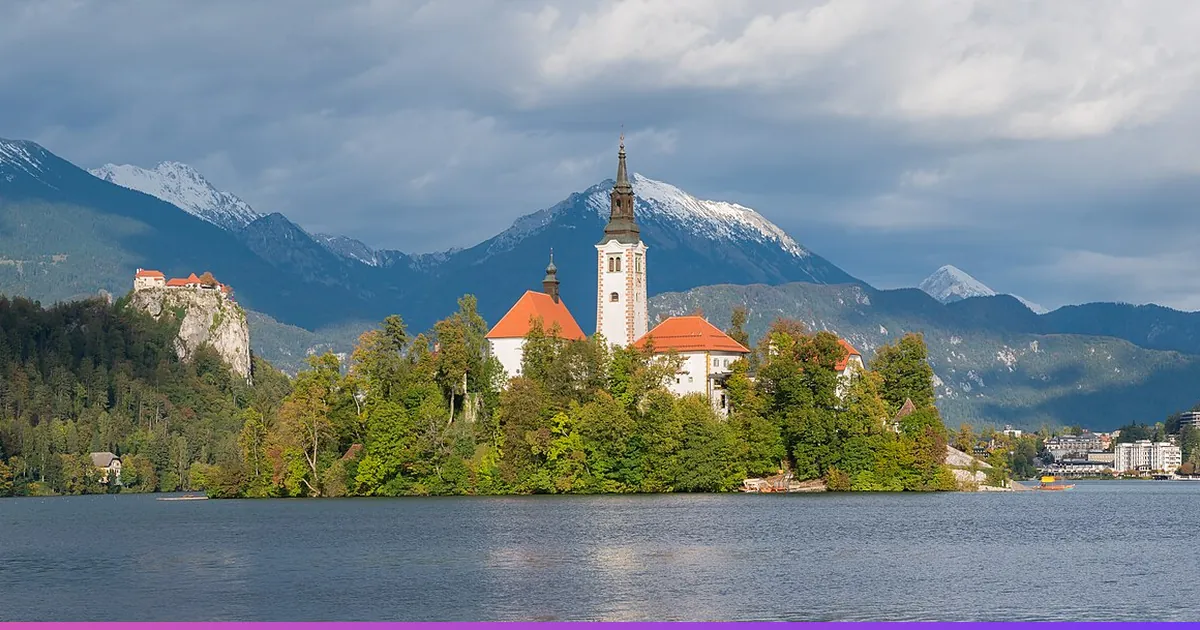
The alpine north-central dialects, around Bled and the Julian Alps. Often described as preserving the most conservative pronunciation features, including the most audible pitch accent system in spoken Slovenian.
4. Lower Carniolan (Dolenjska)
The central-southern dialects around Novo Mesto. Also tonal, also relatively conservative.
5. Styrian (Štajerska)
The eastern central dialects, around Maribor and Celje. Strong influence from German and Croatian (Kajkavian) neighbours.
6. Pannonian
The far-eastern dialects, especially Prekmurje, with audible Hungarian influence. Prekmurian has its own literary tradition that pre-dates standard Slovenian in some respects and is sometimes treated as a microlanguage in its own right.
7. Carinthian (Koroška)
The northern dialects, straddling the modern Austrian border. Heavy German influence on vocabulary and prosody. Slovenian-speaking communities still exist in Austrian Carinthia.
Forty Ways to Say "Grandma"
The clearest illustration of Slovenian dialect diversity is what locals call their grandmothers. The standard word is babica. The dialect map gives you something closer to a small thesaurus:
babica · babi · babca · stara mati · stara mama · majka · oma · nona · noni · stara · šnota · ana · mama · nena · mam · mati stara · mamika
A few of these have clearly visible origins.
- Nona is the word used along the Primorska coast, borrowed from Italian nonna.
- Oma is the word used in Carinthia, borrowed from German Oma.
- Stara mama ("old mother") is common in Prekmurje in the east.
- Babica, the standard, is the form that became literary.
In some alpine valleys, grandma has a name that is used in three or four neighbouring villages and absolutely nowhere else in the country. There is a Slovenian saying: Vsaka vas ima svoj glas, "every village has its own voice." It is approximately true.
Slovenian linguists have done this exercise for many other everyday words too. Grandfather, milk, bread, kitchen, every term that anchors daily life often has ten or twenty regional variants.
Why So Many Dialects? Three Reasons
A speaker base of 2.5 million does not normally produce 48 dialects. Three structural reasons explain Slovenia's unusual case.
1. Geography
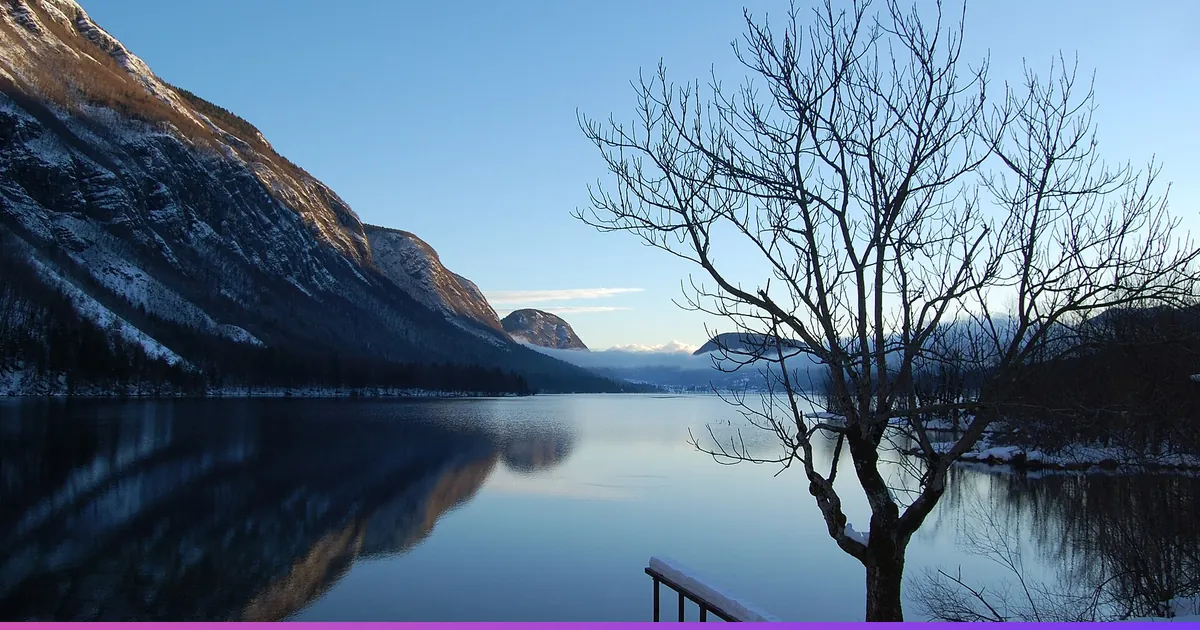
Slovenia is small but extremely mountainous. The Julian Alps, the Karavanke, the Kamnik-Savinja Alps, the Pohorje massif, and the Karst plateau cut the country into hundreds of valleys. Two villages thirty kilometres apart in a straight line can be a full day's hike apart on foot. Until the late 19th century, marrying someone from the next valley was already considered a long-distance relationship.
When physical contact between communities is slow, language drift accelerates. Each valley develops its own micro-vocabulary, its own pronunciation habits, its own inherited idioms. Multiply that across a country that is essentially one big mountain range with rivers running through it, and you get 48 dialects.
2. History: Centuries of Political Fragmentation
Slovene-speaking territory was, for most of its history, divided between Austrian Habsburg crown lands. The historic regions are easy to list and they map closely to the dialect groups:
- Carniola (Kranjska): Ljubljana and central Slovenia
- Styria (Štajerska): Maribor and eastern central Slovenia
- Carinthia (Koroška): Klagenfurt and northern Slovenia
- Gorizia and Trieste: the western and coastal areas
Each had its own administrative centre, its own school system, its own urban prestige variety, and its own cultural connections. Carniola looked toward Ljubljana; Styria toward Graz; Carinthia toward Klagenfurt and Vienna; Gorizia toward Venice and Trieste. Slovenia as a single political unit only consolidates in 1918 with the creation of Yugoslavia, then again in 1991 as an independent country. That is historically very recent.
Centuries of political fragmentation produced centuries of linguistic fragmentation.
3. Multiple Borrowing Sources
Slovenia borders four very different linguistic worlds:
- Italian on the west and southwest
- German on the north (Austria)
- Hungarian on the northeast
- Croatian (South Slavic) on the south and east
Every dialect group near a border absorbed vocabulary and sometimes structure from its neighbour. Coastal Primorska Slovenian has Italian borrowings the eastern dialects do not have. Eastern Prekmurje Slovenian has Hungarian borrowings the coastal dialects do not have. Carinthian Slovenian has German borrowings the south does not have. Styrian Slovenian has Croatian-flavoured features inherited from contact with Kajkavian Croatian.
A native speaker of one Slovenian dialect can often tell which border another speaker is from just by the loanwords they reach for.
What Dialect Variation Sounds Like
To make this concrete, here is a single Slovenian sentence in standard form and in two dialect versions:
Standard:
Babica peče kruh v peči. "Grandma is baking bread in the oven."
Prekmurje (eastern, Pannonian):
Stara mama pečé krüj v peči.
Primorska (coastal, near Italy):
Nona piče pan u peči.
Three different words for grandma. Two different words for bread (kruh in standard and Prekmurje, pan on the coast, which is essentially Italian pane). The verbs and the locative v peči / u peči differ in vowel quality and pronunciation. To a non-Slovenian ear, these can sound like three different languages.
A note for speakers of other Slavic languages: the core words peče (bakes), kruh (bread), and peč (oven) are pan-Slavic. Czech peče chléb v peci. Russian печёт хлеб в печи. Polish piecze chleb w piecu. From Ljubljana to Vladivostok, the deep Slavic vocabulary still works.
Hear the Dialects: An Interactive Map
If you want to actually hear what these dialects sound like, the single best resource online is narecja.si, an interactive map of Slovenia produced by the Fran institute and partners. Each region on the map is clickable. When you click a village, a short recording plays of a local speaker reading the same paragraph, so you can compare how different valleys pronounce the same sentence.
<iframe src="https://narecja.si/" width="100%" height="600" style="border:0;border-radius:16px;box-shadow:0 12px 32px rgba(100,61,242,0.08);" loading="lazy" title="Interactive map of Slovenian dialects (narecja.si)" ></iframe>(If the embed does not load, visit narecja.si directly.)
A small listening exercise: click a village in the far east (Prekmurje), then click a village along the coast (Primorska), then click somewhere central (Gorenjska or Dolenjska). The same paragraph will sound noticeably different in each, sometimes drastically so. This is the clearest possible way to feel why Slovenia counts 48 dialects rather than 7 or 8.
The Comparison: How Much Dialect Diversity Other Languages Have
To put 48 dialects in 2.5 million speakers in context, here is a rough comparison across major Slavic languages:
| Language | Approximate dialects | Speakers | Dialects per million |
|---|---|---|---|
| Slovenian | ~48 | 2.5 M | ~19 |
| Croatian | ~30 across 3 macro-groups | ~4 M | ~7.5 |
| Slovak | 3 main groups, rich sub-dialects | ~5 M | ~2 |
| Czech | 4 to 5 main groups | ~10 M | ~0.5 |
| Polish | 4 to 5 main groups | ~38 M | ~0.1 |
| Russian | 3 main groups | ~150 M | ~0.02 |
Croatian deserves a special note: its three macro-dialects (Kajkavian, Chakavian, and Shtokavian) are arguably so different that some linguists treat them as separate languages. Kajkavian, spoken around Zagreb, shares so many features with Slovenian that the two are often mutually intelligible at a conversational level. The dialect boundary between Slovenia and Croatia is, in places, a gradient rather than a line.
But by sheer dialect density per speaker, Slovenia is in its own category.
Closest Living Language to Slovenian
A common follow-up question: what is the closest living language to Slovenian?
Genealogically, Slovenian sits in the Western South Slavic branch, alongside Croatian, Serbian, Bosnian, and Montenegrin. The closest variety is Kajkavian Croatian, the northwestern Croatian dialect group around Zagreb and the Hrvatsko zagorje. Kajkavian shares so many lexical, intonational, and grammatical features with Slovenian that some Slavicists classify it as a bridge variety between the two languages.
A rough order of closeness:
- Kajkavian Croatian, often mutually intelligible at conversational speed
- Chakavian Croatian, the coastal Croatian dialects
- Standard Croatian / Serbian / Bosnian / Montenegrin (Shtokavian), the same Western South Slavic branch
- Macedonian, Bulgarian, Eastern South Slavic
- Sorbian, West Slavic but shares the dual grammatical number with Slovenian
- Slovak, West Slavic, but felt as surprisingly intelligible by many Slovenes (a contact effect, not a family-tree truth)
- Czech, Russian, Polish, Ukrainian, recognisable but distant
If you ever want to crack open Slovenian quickly, a trip to the Croatian zagorje is the warmest possible introduction.
How Slovenian Dialects Survive Today
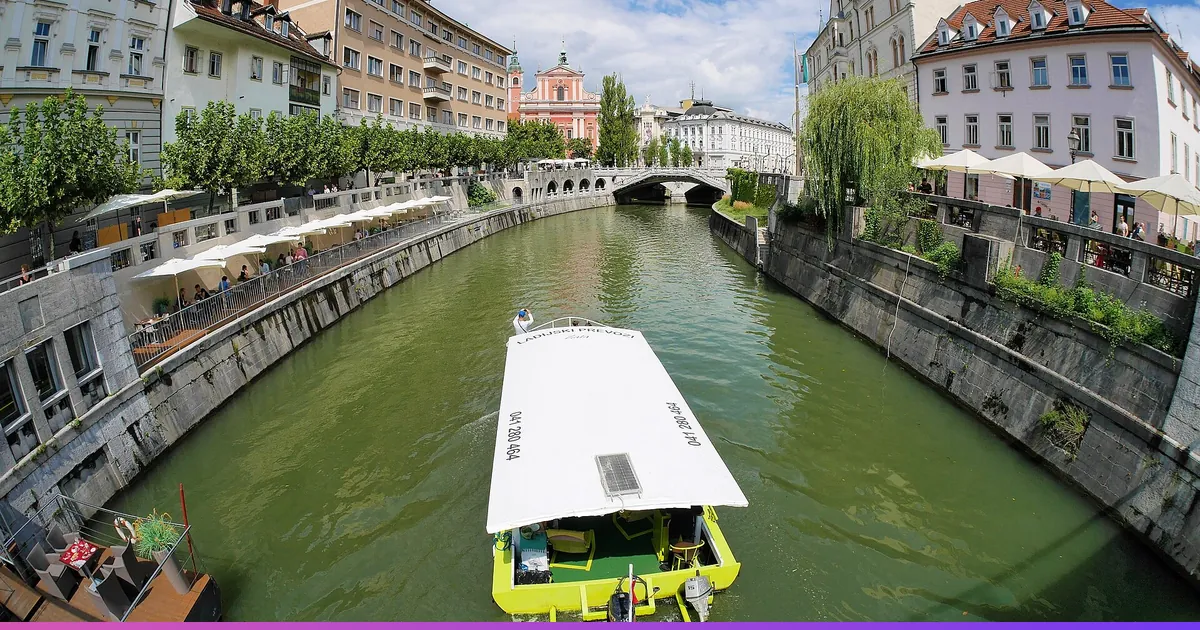
Standard Slovenian (knjižna slovenščina) is the language of schools, government, television, and most printed media. Every Slovenian learns to read and write the standard. In urban settings, particularly in Ljubljana, the standard is also the common spoken variety.
But the dialects are not endangered. They are alive in:
- Local radio and TV in some regions, particularly in the east and along the coast
- Music, especially folk and indie genres. Many contemporary Slovenian musicians sing in dialect, sometimes specifically in their hometown's variety
- Theatre, where dialect plays are a popular tradition
- Family and community life, where the dialect is still the natural register for talking to grandparents, neighbours, and friends from the same town
- Literature, with a sizable body of dialect poetry and prose
Some dialects, especially Prekmurian, have their own literary tradition and grammar books. Prekmurian was used as a written language for centuries and is sometimes treated as a microlanguage rather than just a Slovenian dialect.
Slovenian is the rare case of a small national language that has managed to keep both a strong written standard and a thriving spoken-dialect ecology. Most small languages eventually flatten under the pressure of mass media and education. Slovenian has held its diversity.
What This Means for Learners
For someone learning Slovenian from scratch, focus on the standard literary language, knjižna slovenščina. That is what every educated Slovenian can switch into, what every textbook teaches, and what news and most online media use. With the standard, you can communicate everywhere in the country.
Once you have the standard, the dialects become a kind of bonus content. Spending time in Maribor will expose you to Styrian features. A summer in Koper or Piran will introduce you to the coastal Italian-influenced variety. Music, films, and literature in dialect become enjoyable rather than confusing.
For Slavic-language learners more broadly, picking up Slovenian also gives you partial access to Croatian (especially Kajkavian) and to other South Slavic languages thanks to shared vocabulary and grammar.
The Foreign Service Institute estimates that Slovenian takes around 1,100 hours of focused study for English speakers to reach professional working proficiency. Functional conversational ability is reachable in 400 to 600 hours.
Apps That Teach Slovenian
The Slovenian app market is small, because the speaker base is small. The serviceable list:
Lingoodie offers a Slovenian course that pays users real cash for completing lessons. The micro-rewards make daily consistency easier to sustain, which is the single biggest factor in learning a smaller-base language where motivation is otherwise hard to maintain. Available on Google Play and the App Store.
Drops has a Slovenian module with visual flashcard vocabulary practice, well-suited as a supplement.
Mango Languages offers Slovenian through many public library systems, so it is often free if you have a library card in a participating region.
Pimsleur has a Slovenian audio course, expensive but high-quality.
Memrise has community-built decks but no official Slovenian course.
Duolingo and Babbel do not currently offer Slovenian.
For a broader picture, see our guide to the best language learning apps.
A Last Note: 48 Dialects, One Identity
Linguists studying Slovenia often comment on the paradox at the heart of the country. Forty-eight dialects, some mutually unintelligible, in a country smaller than New Jersey. By every linguistic prediction, that should have produced fragmentation, not unity.
It did not. Slovenian identity is, if anything, stronger than the country's size suggests. The dialects are a source of regional pride rather than a barrier. Slovenians talk about their dialects the way Italians talk about their regional pasta shapes, with affection, specificity, and a slight competitive edge.
The standard literary language carries the country. The dialects carry the villages. And the result is a small nation with the linguistic depth of a much larger one.
Quick Reference
| Concept | Slovenian |
|---|---|
| Number of dialects | ~48 |
| Number of macro-dialect groups | 7 |
| Standard literary language | knjižna slovenščina |
| Country population | ~2.1 million inside, ~2.5 million including diaspora |
| Dialects per million speakers | ~19 (highest in the Slavic world) |
| Mutually unintelligible pairs | Yes (e.g. Prekmurje and Primorska in pure dialect form) |
| Closest related language | Kajkavian Croatian |
| FSI difficulty for English speakers | ~1,100 hours to professional proficiency |