"Have You Eaten?": The Question That Quietly Means "I Love You"
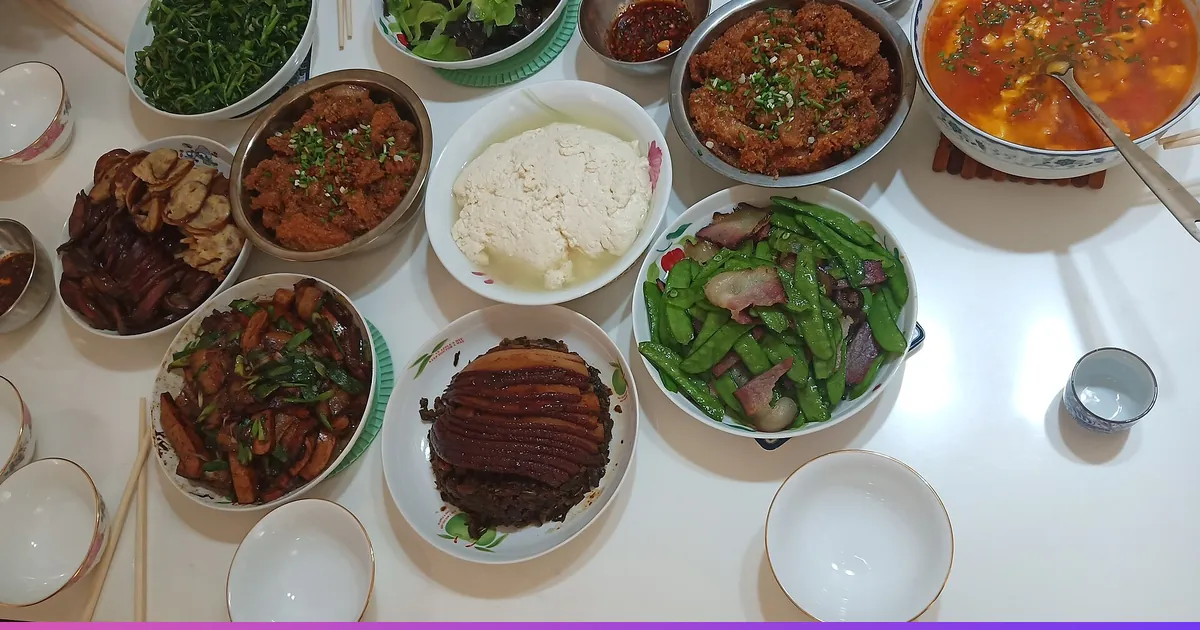
There is a question that millions of people hear from the person who loves them most, almost every single day. It is not "how are you feeling?" and it is not "I love you." It is "have you eaten?"
In Korea, China, Vietnam, Thailand, and across much of Asia, this question is one of the warmest things a person can say to you. A grandmother says it when you walk in the door. A mother sends it by text before she sends anything else. A partner asks it at the end of a long day. On the surface it is about food. Underneath, it means something closer to "I am thinking about you, and I want you to be okay."
If you grew up in the West, this can take a while to notice. You answer the literal question, "yes, I ate," and move on, not realising you have just brushed past a small act of love. Once you see it, you cannot unsee it. And it turns out to be one of the most beautiful things language learning can teach you: that "I care about you" does not sound the same everywhere.
A Greeting That Is Really a Hug
In Korean, the phrase is 밥 먹었어? (bap meogeosseo?), or more politely 밥 먹었어요? (bap meogeosseoyo?). It translates literally to "did you eat rice?" but Koreans use it the way English speakers use "how are you?" It is a casual, everyday greeting, a way of opening a conversation with warmth rather than a genuine request for your meal log.
The Asia Society lists "밥 먹었어요?" among the first phrases worth understanding about Korean daily life precisely because it is not really about the rice. When an older Korean relative asks it, and you say you have not eaten, do not be surprised if they immediately start making you something. The question carries an offer inside it.
The same idea runs through Chinese. 你吃了吗? (nǐ chī le ma?), or 你吃饭了吗? (nǐ chī fàn le ma?), means "have you eaten?" and has been a standard friendly greeting for generations. By some accounts the phrase as a social formula goes back centuries, tied to a culture where asking after someone's meal was simply how you showed you cared. Worth noting for learners: many young people in mainland China now lead with 你好 (nǐ hǎo) instead, so "have you eaten?" today can feel a little traditional, the kind of thing a grandparent says. That is part of its charm, not a strike against it.
The Same Love, in Many Languages
What is striking is how far this single idea travels. The "have you eaten (rice) yet?" greeting shows up, in one form or another, across an enormous stretch of Asia.
Here is the same warmth in several languages, with the literal meaning kept intact so you can see the pattern.
| Language | Phrase | Roughly how it sounds | Literal meaning |
|---|---|---|---|
| Korean | 밥 먹었어? | bap meogeosseo? | Did you eat rice? |
| Mandarin Chinese | 你吃了吗? | nǐ chī le ma? | Have you eaten? |
| Cantonese | 食咗飯未啊? | sik zo faan mei a? | Have you eaten rice yet? |
| Vietnamese | Ăn cơm chưa? | an com chuaa? | Have you eaten rice yet? |
| Thai | กินข้าวหรือยัง | gin khao reu yang? | Have you eaten rice yet? |
| Bengali | ভাত খেয়েছ? | bhat kheyecho? | Have you eaten rice? |
| Malay | Sudah makan? | soo-dah ma-kan? | Have you eaten already? |
Notice how often the word for "rice" and the word for "food" or "a meal" are the same word, or sit right next to each other. In Korean, 밥 (bap) means cooked rice and also, more broadly, "a meal." In Vietnamese, cơm is cooked rice and stands in for food itself. In Thai, ข้าว (khao) does the same job. To ask whether someone has had their rice is, in these cultures, simply to ask whether they have been fed and looked after.
The reach is wider still. Variations of the same greeting appear in Burmese, Khmer, Malayalam, Sinhala, Tagalog, Taiwanese, and more. Across a huge and varied part of the world, the most natural way to say "hello, I care" is to ask about a bowl of rice.
Why Food, and Why Rice
So why did food become the language of care here, and not, say, the weather?
The most common explanation is memory. Many of these cultures lived through long stretches where food was not guaranteed. In Korea, the decades around and after the Korean War were marked by real scarcity, and a shared meal became a powerful symbol of generosity and survival. In China, older generations who remember hungry years carried the habit of checking, gently, whether the people around them had enough to eat. When "have you eaten?" was a real and serious question, asking it was already an act of love. The phrase outlived the hardship and kept the warmth.
There is also a simpler linguistic point hiding here. Linguists call this kind of expression phatic communication, language whose job is social connection rather than literal information. "How are you?" in English is phatic. Nobody expects a medical update. "Have you eaten?" works exactly the same way: the content is food, but the function is connection. Understanding that a phrase is phatic, that it is a handshake and not a question, is a real part of becoming fluent. It is the difference between translating words and actually understanding people.
How the West Says the Same Thing
Does the West not care about feeding the people it loves? Of course it does. The difference is that the care usually shows up in actions rather than in a spoken greeting.
Think of the Italian grandmother who will not let you leave the table, piling more onto your plate while insisting "mangia, mangia." Think of the parent who keeps the fridge stocked with the one thing you like, or the friend who shows up to a hard week with a lasagne. Across many Western cultures, food is absolutely a love language. It just tends to be expressed by doing rather than by asking. The standard verbal greeting stayed focused on feelings and wellbeing, "how are you?", "you alright?", "how's it going?", rather than on the stomach.
That is the quiet contrast worth sitting with. In much of Asia, love is spoken as "have you eaten?" In much of the West, love is often cooked, packed, and served, but rarely said out loud at the door. Neither is warmer than the other. They are simply two different accents of the same human impulse: to make sure the people we love are taken care of.
What This Teaches Anyone Learning a Language
This is exactly the kind of thing that makes language learning worth it, and exactly the kind of thing that flashcards alone will never give you.
If you only ever learn "have you eaten?" as a vocabulary item, you will answer it wrong, politely and literally, for years. Learn it as a feeling, and suddenly a whole culture opens up. You understand why your Korean friend's mother keeps asking, why your Chinese colleague's grandfather says it every time, why the right answer is sometimes just a warm "yes, and you?" rather than a report on your lunch.
Language carries this kind of meaning everywhere, not only in Asia. Every language has phrases that mean far more than their words. The goal is not to memorise the dictionary. It is to learn enough, consistently enough, that you start to hear the love hiding inside ordinary sentences.
A Small Note on How We Think About This at Lingoodie
We built Lingoodie around a simple belief: people stick with a language when learning it feels good, not like a chore. That is why the app is built to keep you coming back day after day, because the people who actually get to the point of understanding a phrase like "have you eaten?" in the original are the ones who showed up consistently, not the ones who crammed once and quit.
A few other apps live in this space too. If you are weighing up the best language learning apps, you will find Lingoodie alongside Duolingo, Babbel, and Memrise, each with their own approach to daily practice. What we care about most is the part that the cultural meaning of "have you eaten?" points straight at: that a language is a way into how other people love, joke, worry, and welcome you in. Lingoodie also rewards you for the daily practice itself, because the habit is the hard part, and a small nudge to keep going turns out to matter more than almost anything else.
You do not need us to start noticing this, though. The next time someone asks whether you have eaten, in any language, hear what they are actually saying. Then answer the real question.
So. Have you eaten?